
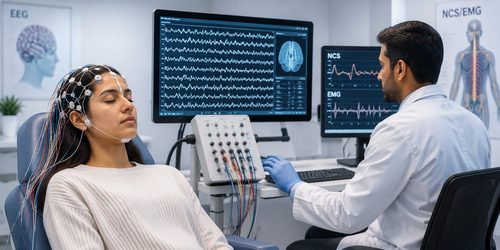
What are EEG & NCS/EMG Studies?
Electroencephalography (EEG) is a non-invasive diagnostic test that records the electrical activity of the brain. It helps doctors evaluate abnormal brain activity and supports the diagnosis and monitoring of conditions such as seizures and epilepsy.
Nerve Conduction Studies (NCS) measure how quickly and effectively electrical signals travel through the nerves. They can help identify nerve damage, compression, or other peripheral nerve disorders.
Electromyography (EMG) evaluates the electrical activity of muscles and the nerves controlling them. It may help assess muscle weakness, numbness, tingling, pain, and suspected nerve or muscle disorders.
At KK Swara Super Speciality Hospital in Boduppal, patients can receive comprehensive neurological evaluation and diagnostic testing with appropriate clinical assessment and follow-up by experienced specialists.
When are EEG & NCS/EMG Studies Recommended?
- Seizures, blackouts, or unexplained episodes of altered awareness
- Suspected epilepsy or abnormal brain activity
- Frequent unexplained muscle twitching or jerking
- Numbness or tingling in the hands, arms, legs, or feet
- Persistent muscle weakness or reduced muscle strength
- Nerve pain, burning sensations, or abnormal sensations
- Suspected carpal tunnel syndrome or nerve compression
- Suspected peripheral neuropathy or nerve damage
- Evaluation of muscle or nerve disorders
- Monitoring or further evaluation of certain neurological conditions
How are EEG & NCS/EMG Studies Performed?
EEG, NCS, and EMG are diagnostic tests selected according to the patient's symptoms and clinical requirements.
EEG Study
During an EEG, small electrodes are placed on the scalp to record the brain's electrical activity. The procedure is generally painless and may be performed while the patient is awake or asleep, depending on the purpose of the test.
Nerve Conduction Study
During NCS, small electrical impulses are applied to specific nerves, and the resulting nerve signals are measured. This helps assess nerve function and signal transmission.
EMG Study
During EMG, a small electrode may be used to record the electrical activity of selected muscles. The findings can help doctors evaluate whether symptoms are related to nerve, muscle, or nerve-muscle communication problems.
Clinical Evaluation & Reporting
Test results are interpreted along with the patient's symptoms, medical history, and clinical examination to support an appropriate diagnosis and treatment plan.
Why Choose KK Swara for EEG & NCS/EMG Studies?
- Experienced neurological and diagnostic care team
- Comprehensive evaluation of nerve, muscle, and brain-related conditions
- Modern neurodiagnostic facilities
- Accurate and systematic diagnostic assessment
- Individualized evaluation based on symptoms and medical history
- Appropriate guidance before and after diagnostic testing
- Convenient location in Boduppal, near Uppal
- Comprehensive neurological care under one roof