Lower abdominal pain affects millions worldwide, ranging from mild discomfort to serious conditions requiring urgent care. Understanding its causes, symptoms, and warning signs empowers better self-management and timely medical intervention. Common Causes of Lower Abdominal …
January 10, 2026
Lower Abdominal Pain: Causes, Symptoms & When to Seek Medical Care

Lower abdominal pain affects millions worldwide, ranging from mild discomfort to serious conditions requiring urgent care. Understanding its causes, symptoms, and warning signs empowers better self-management and timely medical intervention.
Common Causes of Lower Abdominal Pain
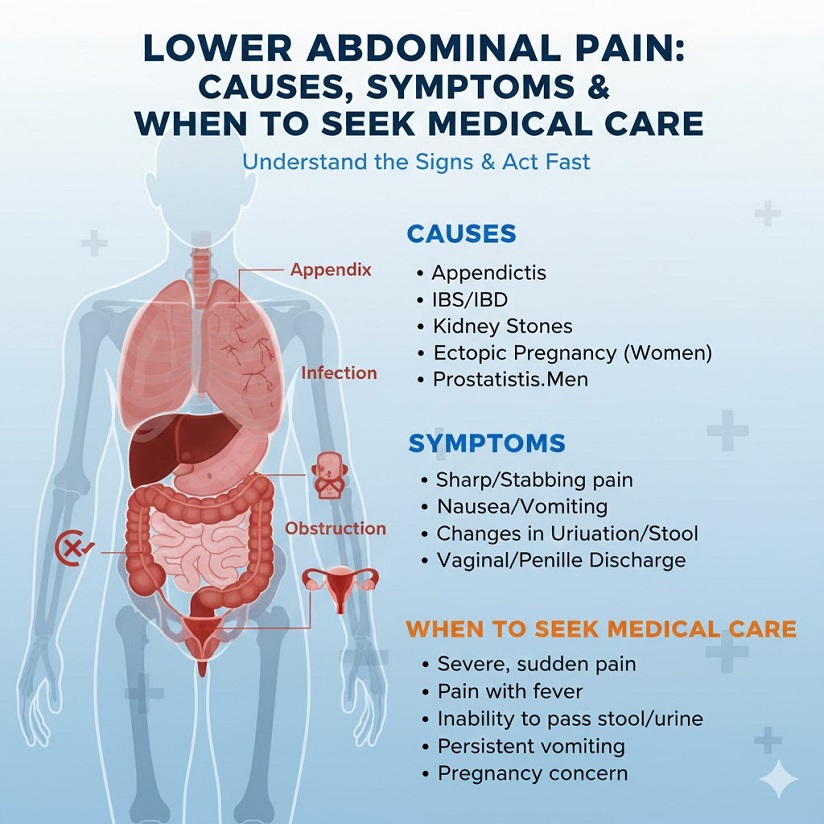
Lower abdominal pain often stems from digestive issues like irritable bowel syndrome (IBS), constipation, or gas buildup, which cause cramping and bloating. Urinary tract infections (UTIs) or kidney stones produce sharp, burning sensations, especially during urination, while gynecological factors such as ovarian cysts, endometriosis, or menstrual cramps predominantly affect women. In men, prostate issues or hernias may contribute, and both genders face risks from appendicitis or inflammatory bowel disease (IBD). Less common triggers include muscle strains from exercise or food intolerances like lactose deficiency.
Key Symptoms of Lower Abdominal Pain
Symptoms vary by cause but typically include dull aches, sharp stabs, or throbbing in the lower belly, often worsening after eating or bowel movements. Accompanying signs feature bloating, diarrhea, constipation, nausea, vomiting, or urinary changes like frequent urges or blood traces. Women might notice irregular periods or pelvic pressure, while fever, chills, or fatigue signal infection or inflammation. Pain location matters: right-side often hints at appendicitis, left-side at diverticulitis. Track duration and intensity, as chronic pain over weeks differs from acute episodes.
When to Seek Care
Seek immediate emergency help for severe, sudden pain with chest pressure, trauma, bloody stools, persistent vomiting, high fever, rigid abdomen, dizziness, or breathing trouble—these indicate potential rupture, blockage, or heart issues. Urgent care suits moderate pain lasting over 48 hours, unexplained weight loss, prolonged bloating, burning urination, or pregnancy concerns. Non-urgent evaluation fits recurring pain over a week, chronic diarrhea, or appetite loss. Pregnant individuals or recent surgery patients should err toward prompt checks. Early action prevents complications like perforation or sepsis.
Home Management Tips for Lower Abdominal Pain
Rest and hydration ease mild cases; apply heat packs to relax muscles and improve blood flow. Over-the-counter antacids, laxatives, or pain relievers like ibuprofen help gas, constipation, or cramps, but avoid if bleeding or severe symptoms exist. Dietary tweaks—high-fiber foods, probiotics, smaller meals—combat IBS or indigestion; track triggers via a food diary. Light walks aid digestion, while stress reduction through yoga or deep breathing tackles functional pain. Never ignore patterns; consult professionals before long-term remedies. These steps support recovery but substitute no diagnosis.
Prevention Strategies
Maintain a balanced diet rich in fruits, vegetables, and whole grains to prevent constipation and IBS flares. Stay hydrated, exercise regularly, and manage weight to lower hernia or stone risks. Practice safe sex and hygiene to avoid UTIs or STIs. Women benefit from routine gynecological screenings for cysts or fibroids. Limit NSAIDs if prone to ulcers, and address mental health, as anxiety amplifies pain perception. Annual check-ups catch silent issues early. Proactive habits reduce frequency and severity.
Lower abdominal pain demands attention to its diverse origins, from benign to critical. While many resolve naturally, vigilance on red flags ensures safety. Consult healthcare providers for personalized guidance, fostering long-term wellness.
Read more: Gynecologists in Hyderabad | Why does Knee Replacement Surgery Fails
Book your appointment online
Our simple to use, online appointment process makes it easy for you to book for any one of our services and doctors.