
Papaya, often called the "fruit of the angels," delivers a wealth of nutrients and health benefits backed by research. Its vibrant orange flesh packs vitamins, enzymes, and antioxidants that support digestion, immunity, and more. This …
January 15, 2026
Top Health Benefits of Papaya and Nutrition Value

Papaya, often called the “fruit of the angels,” delivers a wealth of nutrients and health benefits backed by research. Its vibrant orange flesh packs vitamins, enzymes, and antioxidants that support digestion, immunity, and more. This blog explores 12 key health benefits alongside its nutritional profile.
Discover Benefits of Papaya
Nutritional Value
One cup (145g) of ripe papaya provides about 62 calories, 1.7g protein, 0.4g fat, 16g carbohydrates (including 2.5g fiber), and no cholesterol. It supplies 101% of the daily value (DV) for vitamin C, 33% for vitamin A, 14% for folate, and smaller amounts of vitamin E, K, B vitamins, potassium (9% DV), magnesium, and lycopene.
These nutrients make papaya low-glycemic and hydrating, ideal for daily wellness. Antioxidants like beta-carotene and lycopene enhance its superfood status.
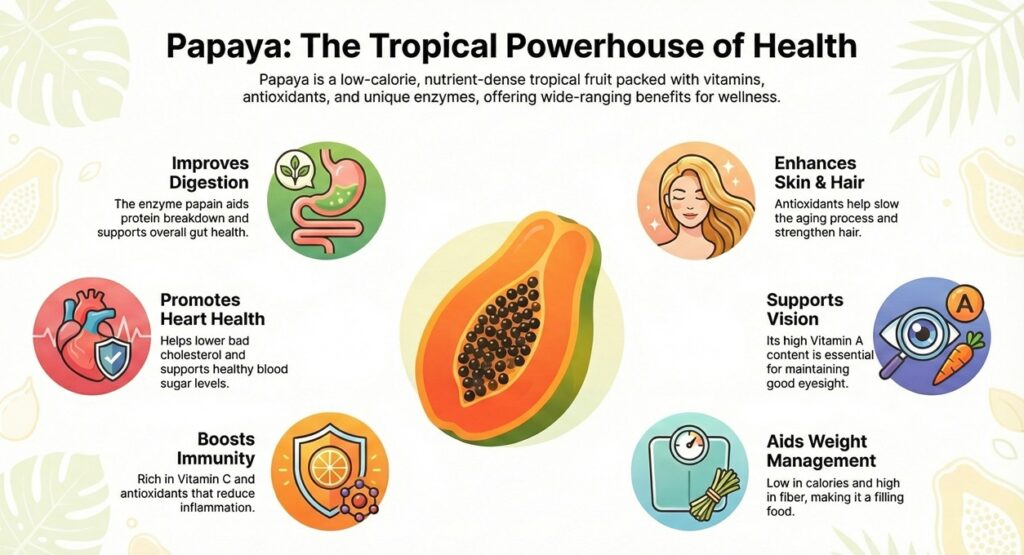
Aids Digestion
Papaya’s papain and chymopapain enzymes break down proteins, easing bloating and constipation. High fiber and water content promote regular bowel movements.
Studies show these enzymes reduce inflammation in the gut, helping with upset stomachs or IBS symptoms. Regular intake supports a healthy microbiome.
Boosts Immunity
Loaded with vitamin C, papaya strengthens white blood cell production against infections. Antioxidants neutralize free radicals, reducing oxidative stress.
Its folate aids immune cell formation, making it vital during flu season or stress. One papaya exceeds daily vitamin C needs.
Improves Heart Health
Lycopene and vitamin C lower LDL cholesterol while raising HDL, cutting heart disease risk. Potassium regulates blood pressure by countering sodium.
A 14-week study found fermented papaya reduced inflammation markers and improved cholesterol ratios. Fiber binds excess cholesterol for elimination.
Protects Eye Health
Beta-carotene converts to vitamin A, preventing night blindness and macular degeneration. Lutein and zeaxanthin filter harmful blue light.
Regular consumption supports retinal health, reducing age-related vision loss. Antioxidants combat oxidative damage in eyes.
Supports Skin Health
Vitamin C boosts collagen for firm, glowing skin. Antioxidants like lycopene fight UV damage and wrinkles.
Papain exfoliates dead cells, while enzymes heal minor wounds. Hydration from its 88% water content keeps skin plump.
Reduces Inflammation
Enzymes and antioxidants like lycopene ease chronic inflammation linked to arthritis, asthma, and Alzheimer’s. They block free radical damage.
Studies confirm papaya lowers inflammatory biomarkers, aiding joint pain or post-exercise recovery. Fermented extracts show up to 40% reduction in oxidative stress.
Aids Weight Management
Low-calorie with high fiber, papaya promotes fullness without spiking blood sugar. Enzymes improve nutrient absorption for sustained energy.
Its water content hydrates while curbing cravings. Pairing with protein enhances satiety for weight loss diets.
Fights Oxidative Stress
Carotenoids neutralize free radicals, slowing aging and disease. Research on older adults shows reduced DNA damage from papaya intake.
This protects against prediabetes, hypothyroidism, and liver issues by lowering iron overload.
Anticancer Potential
Lycopene and beta-carotene inhibit cancer cell growth in lab studies, particularly for prostate and colon cancers. Antioxidants prevent DNA mutations.
Papaya extracts show tumor-suppressing effects, though human trials continue. Daily intake supports prevention.
Enhances Wound Healing
Papain speeds tissue repair by dissolving dead cells and fighting bacteria. Applied topically or eaten, it accelerates recovery from burns or cuts.
Vitamin C aids collagen synthesis for stronger scars. Traditional uses include meat tenderizing for its proteolytic power.
Balances Hormones
Folate supports reproductive health and hormone regulation. Vitamin E and antioxidants ease menstrual cramps or PMS.
Potassium aids thyroid function, while enzymes reduce bloating from hormonal shifts.
Read more: Best Gynecologists in Uppal | Why does Knee Replacement Surgery Fails
How to Incorporate Papaya
Add to smoothies, salads, or eat fresh for breakfast. Ripe papaya suits most; green for savory curries. Aim for 1-2 cups daily, but consult doctors if pregnant due to latex risks.
Store at room temperature until ripe, then refrigerate. Seeds offer mild peppery benefits when ground.
Papaya transforms simple meals into nutrient powerhouses. Embrace this tropical gem for vibrant health—its benefits span gut to glow.
Book your appointment online
Our simple to use, online appointment process makes it easy for you to book for any one of our services and doctors.