PCOD and PCOS are often confused hormonal conditions affecting millions of women, but they differ in severity, causes, and impacts. PCOD is typically a milder ovarian issue, while PCOS is a systemic endocrine disorder with …
January 16, 2026
PCOD vs PCOS – Know Key Differences, Symptoms and Treatment

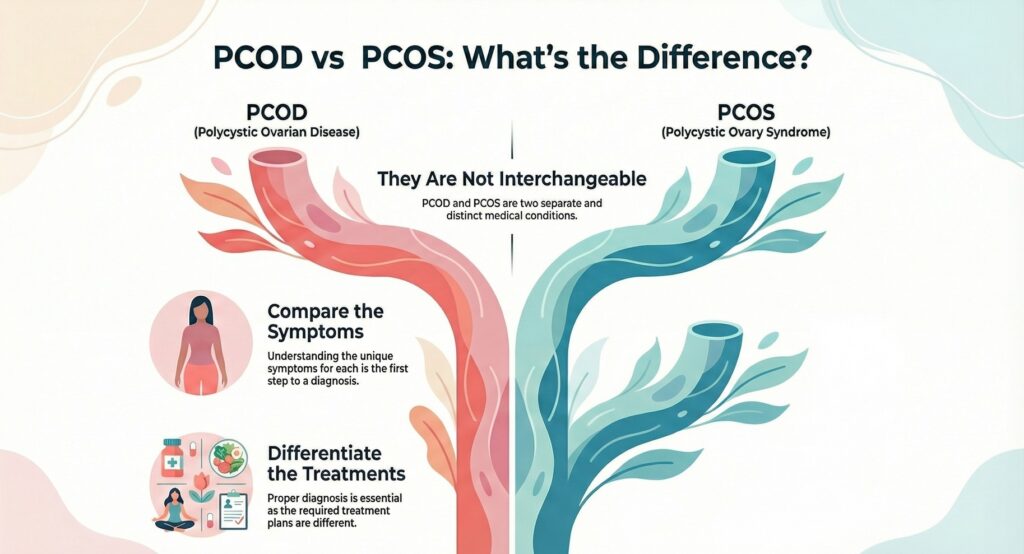
PCOD and PCOS are often confused hormonal conditions affecting millions of women, but they differ in severity, causes, and impacts. PCOD is typically a milder ovarian issue, while PCOS is a systemic endocrine disorder with broader health risks. This blog breaks down their differences, symptoms, causes, diagnosis, treatments, and prevention strategies.
Key Definitions of PCOD vs PCOS
PCOD, or Polycystic Ovarian Disease, involves the ovaries producing multiple immatures or partially mature eggs that form small cysts, leading to hormonal imbalances. It affects ovarian function primarily and impacts 20-30% of women globally.
PCOS, or Polycystic Ovary Syndrome, is a more complex metabolic disorder characterized by enlarged ovaries with cysts, high androgen levels, and insulin resistance. It affects 5-10% of reproductive-age women and carries risks like diabetes and heart disease.
The main distinction: PCOD focuses on cyst formation from immature eggs, while PCOS involves whole-body hormonal chaos preventing egg release.
Symptoms Comparison of PCOD vs PCOS
Both share overlapping signs like irregular periods, but PCOS symptoms hit harder.
| Aspect | PCOD Symptoms | PCOS Symptoms |
| Menstrual Cycle | Irregular, delayed periods | Absent or very infrequent periods |
| Weight Gain | Mild, around abdomen | Significant, hard to lose |
| Hair Growth/Acne | Mild hirsutism, acne | Severe excess hair (hirsutism), acne |
| Hair Loss | Thinning scalp hair | More pronounced male-pattern baldness |
| Fertility | Reduced ovulation, manageable | Anovulation, higher infertility risk |
PCOD often causes milder mood swings and fatigue, while PCOS links to severe insulin issues, sleep apnea, and depression.
Causes and Risk Factors
PCOD arises from lifestyle-driven hormonal glitches, like poor diet, stress, or genetics, triggering immature egg release. It ties to puberty or perimenopause fluctuations.
PCOS stems from genetic predisposition, excess insulin boosting androgens, low-grade inflammation, and heredity. High insulin blocks ovulation, worsening cysts.
Shared risks include obesity, family history, and sedentary habits. PCOS has stronger metabolic ties, with 50-70% of cases showing insulin resistance.
Diagnosis Process
Diagnosis starts with medical history and symptoms. Ultrasound reveals multiple small cysts (PCOD: fewer, functional; PCOS: more numerous, dysfunctional).
Blood tests measure androgens, insulin, LH/FSH ratio (elevated in PCOS), cholesterol, and glucose. PCOD shows milder imbalances; PCOS meets Rotterdam criteria (two of three: cysts, high androgens, anovulation).
No single test distinguishes them perfectly—doctors rule out thyroid issues or tumors first.
Health Complications
PCOD risks include infertility, endometrial thickening, and mild metabolic changes, but most women conceive with tweaks.
PCOS elevates type 2 diabetes (50% risk), heart disease, endometrial cancer, NAFLD, and mental health disorders. Long-term unmanaged PCOS shortens life expectancy due to cardiovascular strain.
Early intervention cuts these risks dramatically.
Treatment Options
Lifestyle forms the base for both: 5-10% weight loss via balanced diet (low-GI, anti-inflammatory) and 150 minutes weekly exercise regulates cycles in 70% of PCOD cases.
PCOD treatments: Hormonal pills for periods, metformin for insulin, ovulation inducers like clomiphene for fertility.
PCOS needs combined therapy: Anti-androgens (spironolactone), GLP-1 agonists, statins for lipids, and IVF if needed. Surgery like ovarian drilling is rare.
Holistic aids like spearmint tea, inositol, and stress management help both.
Lifestyle Management Tips
Diet: Prioritize whole grains, lean proteins, healthy fats; limit sugar and dairy. Mediterranean style shines for PCOS.
Exercise: Yoga, HIIT, strength training improve insulin sensitivity. Aim for consistency over intensity.
Stress Relief: Meditation, sleep hygiene reduce cortisol-driven androgens.
Tracking: Apps monitor cycles; supplements like omega-3, vitamin D fill gaps (under guidance).
Women with PCOD often reverse it fully; PCOS requires lifelong vigilance.
Read more: Gynecology Hospital in Uppal |Why does Knee Replacement Surgery Fails
When to Seek Help
Consult a gynecologist if periods skip >3 months, unexplained weight gain persists, or fertility issues arise. Early screening prevents complications.
In India, rising cases tie to urban diets—Varanasi women, focus on local sattvic foods like millets for balance.
Empowering Takeaways
Understanding PCOD vs. PCOS empowers proactive health. PCOD responds swiftly to changes; PCOS demands holistic care. Track symptoms, adopt sustainable habits, and partner with doctors. Millions thrive post-diagnosis—your story can too.
Ready to reclaim your hormonal balance and vitality? At KK Swara Healthcare, expert care awaits for PCOD, PCOS, and women’s wellness. Our holistic approach blends advanced diagnostics, personalized nutrition, yoga therapies, and proven treatments to restore cycles, boost fertility, and prevent complications. Don’t let imbalances hold you back—book your consultation today for tailored plans that deliver real results. Empower your health journey with us; visit now and step into a symptom-free future!
Tags: PCOD vs PCOS
Book your appointment online
Our simple to use, online appointment process makes it easy for you to book for any one of our services and doctors.