Every minute someone in the India experiences a heart-related emergency. These moments can be life-altering, yet confusion often reigns between two critical conditions: heart attack and cardiac arrest. People frequently use the terms interchangeably, but …
February 10, 2026
Heart Attack vs. Cardiac Arrest: Know the Difference

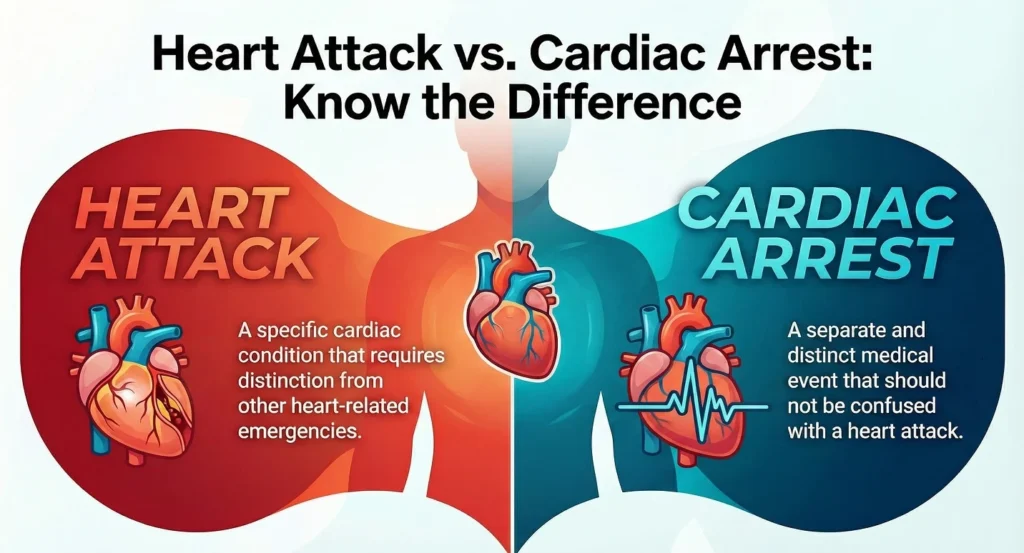
Every minute someone in the India experiences a heart-related emergency. These moments can be life-altering, yet confusion often reigns between two critical conditions: heart attack and cardiac arrest. People frequently use the terms interchangeably, but mistaking one for the other can delay vital treatment. A heart attack is like a plumbing problem in your heart’s arteries, while cardiac arrest is an electrical failure that stops the heart cold. Understanding the difference isn’t just medical trivia—it’s a lifesaver. In this post, we’ll break down what each condition means, their causes, symptoms, treatments, and prevention strategies, empowering you to act fast if it happens to you or a loved one.
What Is a Heart Attack?
A heart attack, medically termed myocardial infarction, occurs when blood flow to a part of the heart muscle is blocked, usually by a blood clot. Imagine your coronary arteries as pipes supplying oxygen-rich blood to your heart. Plaque buildup from cholesterol, fat, and other substances narrows these pipes over time—a condition called atherosclerosis. When a plaque ruptures, it triggers a clot that fully blocks the artery, starving the heart muscle of oxygen.
Without quick intervention, the affected muscle begins to die within minutes. Risk factors include high blood pressure, smoking, diabetes, obesity, high cholesterol, and a sedentary lifestyle. Men over 45 and women over 55 face higher odds, but younger people aren’t immune, especially with rising rates of obesity and stress.
Symptoms of a Heart Attack
Heart attack symptoms can sneak up gradually, often building over hours or days. Classic signs include:
Crushing chest pain or pressure, feeling like an elephant sitting on your chest, lasting more than a few minutes.
Pain radiating to the arms (especially left), jaw, neck, back, or stomach.
Shortness of breath, cold sweats, nausea, or lightheadedness.
Women and people with diabetes might experience subtler “silent” symptoms like fatigue, indigestion, or jaw pain. Don’t ignore these—call emergency services immediately if you suspect one. Time is muscle; the saying goes, because every minute without blood flow kills more heart cells.
What Is Cardiac Arrest?
Cardiac arrest strikes without warning: the heart suddenly stops beating effectively due to a malfunction in its electrical system. Unlike a heart attack’s blockage, this is like a short-circuit in the heart’s wiring. The heart quivers uselessly (ventricular fibrillation) or beats too slowly (asystole), halting effective pumping. Blood stops circulating, depriving the brain and organs of oxygen. Collapse and unconsciousness follow within seconds; without intervention, death occurs in minutes.
It’s not always tied to heart disease—triggers include severe arrhythmias, electrolyte imbalances, drug overdoses, drowning, or trauma. About 350,000 out-of-hospital cardiac arrests happen annually in the U.S., with survival rates under 10% due to its sudden nature.
Symptoms of Cardiac Arrest
There’s no gradual buildup here. Symptoms are abrupt and unmistakable:
Sudden loss of consciousness or responsiveness.
No normal breathing or only gasping (agonal breaths).
No pulse—check the neck or wrist for 5-10 seconds.
The person turns blueish and unresponsive fast. No warning pains like in a heart attack; it’s lights out.
Key Differences: A Side-by-Side Comparison
To make it crystal clear, here’s a quick comparison:
| Aspect | Heart Attack | Cardiac Arrest |
| What Happens | Blocked blood flow to heart muscle | Heart stops beating effectively |
| Onset | Gradual (minutes to hours) | Sudden (seconds) |
| Heart Activity | Still beating, but damaged | Stops or quivers |
| Main Cause | Clogged artery (plaque/clot) | Electrical malfunction |
| Symptoms | Chest pain, sweating, nausea | Collapse, no pulse/breathing |
| Survival Window | Hours if treated promptly | Minutes (brain damage after 4-6 min) |
A heart attack can cause cardiac arrest if the damage disrupts electrical signals, but they’re distinct beasts.
Diagnosis and Treatment
Heart Attack Treatment: Speed is key. Paramedics use ECGs to spot blockages, then rush to a cath lab for angioplasty (balloon unclogs artery) or stents. Clot-busting drugs like tPA may be given if cath isn’t immediate. Long-term: medications (aspirin, statins, beta-blockers), lifestyle changes, or bypass surgery.
Cardiac Arrest Treatment: CPR and defibrillation are lifesavers. Bystander CPR doubles survival odds by maintaining circulation until a defibrillator shocks the heart back to rhythm. AEDs (automated external defibrillators) in public spots analyze rhythm and deliver shocks if needed. Hospitals follow with cooling therapies, drugs, and pacemakers.
Prevention Strategies
You can’t always dodge these, but you can stack the odds. For heart attacks:
Eat heart-smart: More fruits, veggies, whole grains; less saturated fats and salt.
Move daily: Aim for 150 minutes of moderate exercise weekly.
Quit smoking and manage stress—meditation or yoga helps.
Control risks: Monitor blood pressure, cholesterol, and blood sugar.
For cardiac arrest, focus on underlying issues:
Get screened for arrhythmias if you have family history.
Learn CPR and AED use—apps like PulsePoint alert you to nearby arrests.
Stay hydrated and balanced on electrolytes, especially athletes.
Public awareness campaigns like the American Heart Association’s push for “Hands-Only CPR” have boosted bystander intervention rates.
Read more: Cardiologist in Boduppal | Best Super Specialty Hospital in Boduppal
Summary
Heart attacks damage the heart via blocked blood flow and warn with pain—treat with clot-busters and stents. Cardiac arrest halts the heartbeat electrically; causing instant collapse—combat with CPR and defibrillators. Spot the signs, act fast, and prevent through healthy habits. Share this knowledge; it could save a life tomorrow. Stay heart-strong!
Book your appointment online
Our simple to use, online appointment process makes it easy for you to book for any one of our services and doctors.