
Anal problems, such as fissures, hemorrhoids, and abscesses, affect millions worldwide and often stem from everyday issues like constipation or straining. Understanding their symptoms, causes, and treatments can empower you to seek timely relief and …
January 28, 2026
Anal Problems: Symptoms, Causes and Treatment

Anal problems, such as fissures, hemorrhoids, and abscesses, affect millions worldwide and often stem from everyday issues like constipation or straining. Understanding their symptoms, causes, and treatments can empower you to seek timely relief and prevent complications.
Common Symptoms of Anal problems
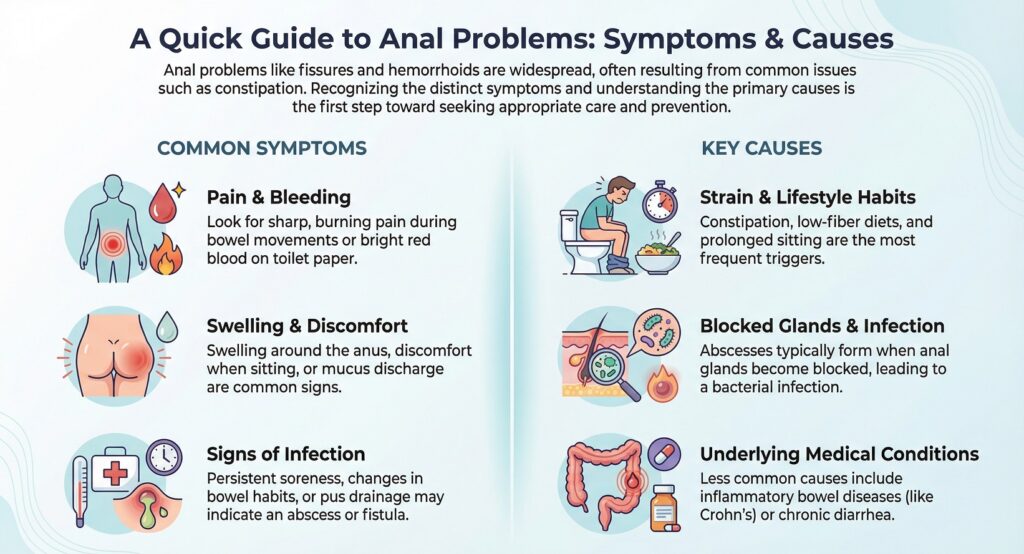
Anal problems typically present with sharp pain during bowel movements, itching, or bleeding. For instance, anal fissures cause burning pain and small amounts of bright red blood on toilet paper, while hemorrhoids lead to swelling, discomfort when sitting, and occasional mucus discharge. Other signs include persistent soreness, pus drainage from abscesses, or changes in bowel habits like diarrhea or constipation, signaling potential fistulas or infections.
Key Causes of Anal problems
Constipation and hard stools top the list, as straining tears the delicate anal lining, forming fissures. Hemorrhoids arise from swollen veins due to prolonged sitting, pregnancy, or low-fiber diets, while abscesses result from blocked anal glands leading to infection. Less common triggers include inflammatory bowel diseases like Crohn’s, chronic diarrhea, anal intercourse, or rare cases like cancer and proctalgia fugax—sudden muscle spasms.
Home Remedies of Anal problems
Start with warm sitz baths (soaking in shallow warm water for 10-15 minutes, 2-3 times daily) to soothe inflammation and promote healing. Boost fiber intake via fruits, vegetables, and whole grains, paired with ample hydration (8-10 glasses daily), to soften stools and ease straining. Apply over-the-counter creams with hydrocortisone or witch hazel for itching, maintain gentle hygiene with unscented wipes, and avoid irritants like spicy foods.
Medical Treatments of Anal problems
For persistent issues, doctors prescribe stool softeners, topical nitroglycerin ointments to relax sphincter muscles in fissures, or rubber band ligation for hemorrhoids. Abscesses and fistulas often require drainage or surgery, such as fistulotomy, under local anesthesia with high success rates. Advanced cases may involve Botox injections or laser therapy, minimizing recovery time compared to traditional methods.
Watch Now: Why does Knee Replacement Surgery Fails
Prevention Strategies
Adopt a high-fiber diet (25-30g daily) and exercise regularly to prevent constipation. Respond promptly to the urge to defecate, limit toilet time to under 5 minutes, and use soft, quilted toilet paper. Pregnant individuals or those with chronic conditions should consult providers early for tailored advice.
When to See a Doctor
Seek immediate care for severe pain, heavy bleeding, fever, or swelling, as these indicate abscesses or infections risking fistulas. Unexplained weight loss, black stools, or symptoms lasting over a week warrant urgent evaluation to rule out IBD or cancer.
KK Swara Healthcare – Gynecology Hospital in Uppal
For expert care in Hyderabad, KK Swara Healthcare, Gynecology Hospital in Uppal, stands out as a trusted multispecialty facility offering advanced treatments for anal problems alongside gynecology services. Their proctologists provide comprehensive diagnostics, minimally invasive procedures like laser fissure surgery, and personalized plans in a patient-centric environment, ensuring quick recovery and discretion.
Book your appointment online
Our simple to use, online appointment process makes it easy for you to book for any one of our services and doctors.