
In today's hyper-connected world, screens are everywhere—from smartphones and tablets to laptops and smart TVs. For kids, they're not just entertainment; they're portals to education, social connections, and endless information. But as parents in bustling …
January 21, 2026
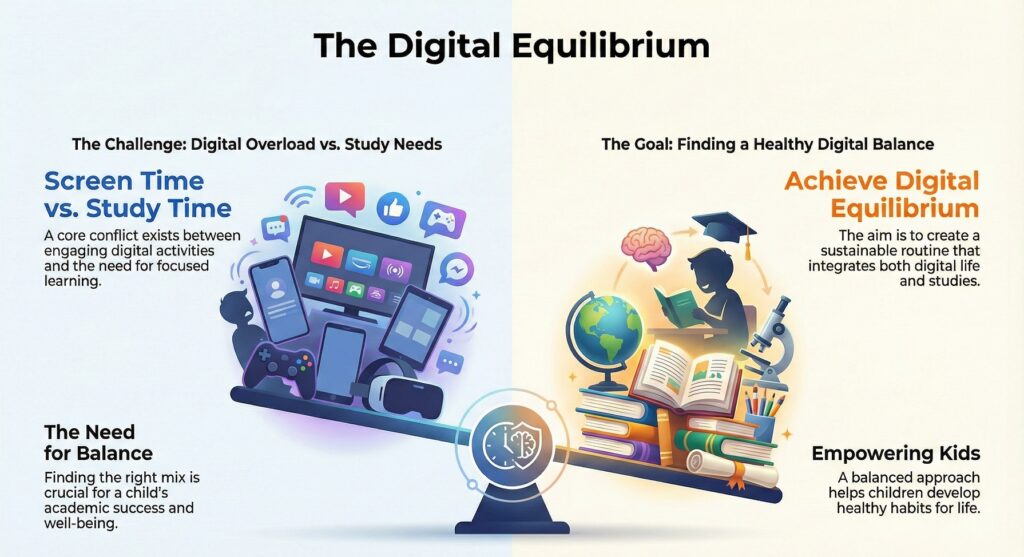
Screen Time and Study Balance: Finding the Right Digital Balance for Kids

In today’s hyper-connected world, screens are everywhere—from smartphones and tablets to laptops and smart TVs. For kids, they’re not just entertainment; they’re portals to education, social connections, and endless information. But as parents in bustling cities like Hyderabad, where after-school tuitions and digital distractions compete for attention, striking the right balance between screen time and study feels like walking a tightrope. Too much screen time can lead to shorter attention spans, sleep issues, and even obesity, while cutting it out entirely ignores its educational potential. The key? Intentional balance that supports learning without overwhelming young minds.
The Screen Time Dilemma: What the Science Says
Research paints a clear picture of screens’ double-edged sword. The American Academy of Pediatrics (AAP) recommends no more than 2 hours of recreational screen time per day for kids aged 5-18, with even stricter limits for younger children. A 2023 study in JAMA Pediatrics linked excessive screen use (over 3 hours daily) to poorer academic performance, reduced physical activity, and heightened anxiety. Yet, educational apps and online learning tools can boost skills—think Khan Academy for math or Duolingo for languages.
The problem intensifies during study hours. Kids often multitask: scrolling Instagram while “studying” homework. This splits focus, as neuroscientists explain through the concept of “attention residue”—your brain lingers on the last task, slashing productivity by up to 40%. In India, where CBSE and state board pressures mount early, this digital tug-of-war hits hard. A 2024 survey by the National Sample Survey Office found Indian teens averaging 4.5 hours of daily screen time, often at the expense of deep study sessions.
Age-Specific Guidelines: Tailoring Balance to Your Child
Balance isn’t one-size-fits-all; it evolves with age. Here’s a practical breakdown:
Ages 2-5 (Preschoolers): Limit to 1 hour of high-quality educational content daily. Use screens for interactive stories or alphabet games, always co-viewed with parents. Prioritize hands-on play—building blocks sharpen spatial skills better than apps.
Ages 6-12 (School Age): Cap recreational screens at 1-2 hours post-homework. Designate “screen-free study zones” like the dining table. Tools like Google’s Family Link or Apple’s Screen Time let you set app limits and downtime.
Ages 13+ (Teens): Allow 2-3 hours, but enforce “tech curfews” an hour before bed—blue light disrupts melatonin, per Harvard sleep studies. Encourage focused study blocks using the Pomodoro technique: 25 minutes study, 5-minute non-screen break.
Pro tip: Track usage with built-in phone features. In Hyderabad’s humid evenings, when kids crave AC-cooled screen time, redirect to outdoor cricket or Ganga-side walks for vitamin D and focus boosts.
Strategies for a Productive Daily Routine
Building balance starts with structure. Create a family media plan, as AAP suggests—discuss it weekly over dinner.
1. Prioritize Study First: Implement a “no screens until homework’s done” rule. Use timers to gamify it: finish math in 45 minutes, earn 20 minutes of Minecraft.
2. Tech-Enhanced Learning: Swap passive scrolling for active tools. Apps like Quizlet for flashcards or BYJU’S for interactive lessons turn screens into study allies. A 2025 meta-analysis in Educational Psychology Review showed such tools improve retention by 25%.
3. Digital Detox Rituals: Schedule unplugged hours—family game nights with Carrom or Ludo. Weekends? Nature outings to Sarnath or Assi Ghat recharge attention spans.
4. Model Healthy Habits: Kids mimic parents. If you’re doom-scrolling during dinner, so will they. Lead by example: phone-free meals foster real conversations.
5. Foster Offline Skills: Encourage reading physical books, journaling, or journaling apps that limit to text-only. These build deep focus, crucial for exams like JEE or NEET.
Monitor for red flags: irritability, declining grades, or eye strain. If persistent, consult experts—poor balance can signal deeper issues like screen addiction.
Real-Life Wins: Stories from Balanced Families
Take Priya, a Hyderabad mom of two. Overwhelmed by her 10-year-old’s 5-hour TikTok binges amid Class 5 exams, she introduced “Golden Hours”: 6-8 PM for undistracted study, followed by 30 minutes of educational YouTube. Grades jumped 15%, and family bonds strengthened. Or consider Aarav, 14, who used Forest app (plants virtual trees during focus time) to curb gaming during board prep—scoring 92% in science.
These stories show balance works when it’s collaborative, not controlling. Praise efforts: “Great job powering through that chapter without your phone!”
Watch Now: Why does Knee Replacement Surgery Fails
Long-Term Benefits: Healthier Minds and Bodies
Mastering this balance yields lifelong wins. Kids with regulated screen time show better executive function—planning, impulse control—per longitudinal studies from the University of California. Physically, it combats sedentary risks: WHO data ties excess screens to 20% higher childhood obesity rates in urban India. Mentally, it nurtures resilience against social media’s comparison traps.
As digital natives grow into tomorrow’s leaders, teaching balance equips them for success in a screen-saturated world.
KK Swara Healthcare – Pediatric Hospital in Uppal
Ready to reclaim your child’s focus? At KK Swara Healthcare, Pediatric Hospital in Uppal specialize in holistic child wellness programs tailored for busy Indian families. Visit www.kkswarahealthcare.com now to book consultation. Your child’s brighter future starts with one click—don’t wait!
Book your appointment online
Our simple to use, online appointment process makes it easy for you to book for any one of our services and doctors.