
Chest pain alarms many people, often sparking fears of a heart attack, yet a normal ECG can leave patients puzzled and anxious. An electrocardiogram (ECG or EKG) records the heart's electrical activity at a single …
January 19, 2026
Why Does Chest Pain Occur Even If ECG Is Normal?

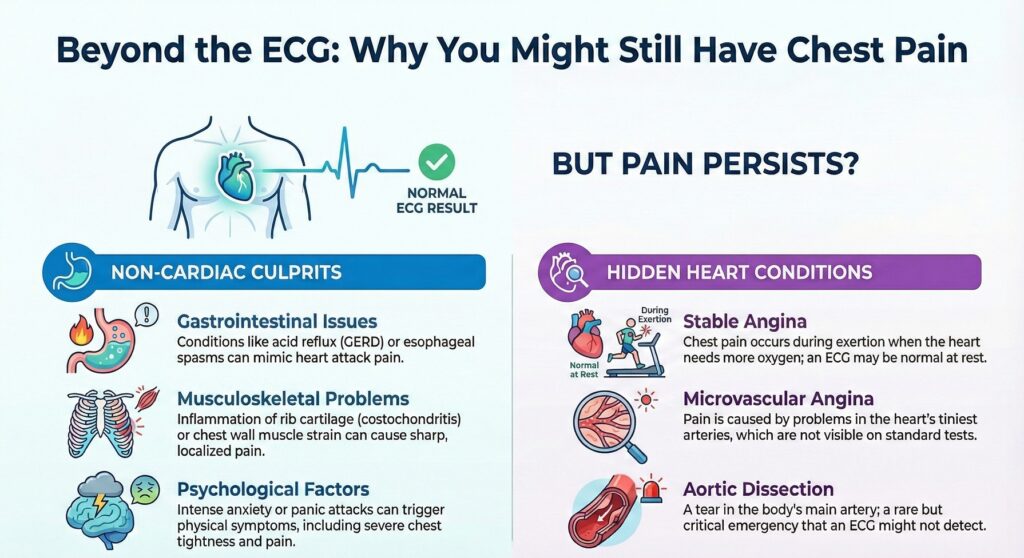
Chest pain alarms many people, often sparking fears of a heart attack, yet a normal ECG can leave patients puzzled and anxious. An electrocardiogram (ECG or EKG) records the heart’s electrical activity at a single point in time, missing intermittent or non-electrical issues. This blog explores the reasons behind chest pain despite normal ECG results, drawing from medical insights to help you understand when to worry and next steps.
Limits of ECG Testing
ECGs excel at detecting acute events like heart attacks or arrhythmias during the test but capture only momentary heart signals. Pain from temporary blockages or small vessel problems may not show up if symptoms aren’t active. Factors like early minor heart issues or non-heart causes keep readings normal, explaining why discomfort persists without ECG changes.
Cardiac Causes
Even heart-related pain evades ECG detection in some cases. Microvascular angina affects tiny heart vessels, causing tightness during stress without major artery changes visible on ECG. Early blockages provoke exertion-related heaviness or burning, yet small clogs rarely alter electrical patterns immediately. Studies show up to 16% of normal-ECG chest pain patients later receive acute coronary syndrome diagnoses via blood tests or imaging.
Musculoskeletal Pain
Chest wall issues top non-cardiac culprits. Costochondritis inflames rib cartilage, yielding sharp pain worsened by movement or breathing, untouched by heart signals. Muscle strains from overexertion, injury, or fibromyalgia mimic cardiac ache but localize to press-tender spots. Shingles or broken ribs add sudden stabs, resolving with rest or anti-inflammatories, unrelated to ECG.
Gastrointestinal Triggers
Acid reflux or GERD sends stomach acid upward, burning the esophagus in a heart-like sensation, often with bloating or sour taste. Esophageal spasms cramp the food pipe, delivering severe, angina-style pain invisible to ECG. Gastritis irritates the stomach lining, while indigestion post-meals heightens discomfort, all bypassing cardiac detection.
Respiratory Conditions
Lung problems frequently fool patients. Pleurisy inflames lung linings, stabbing on inhales or coughs; pneumonia adds fever and localized ache. Asthma tightens airways, or clots block vessels, both causing breathlessness and pain without ECG impact. These worsen with deep breaths, distinguishing them from steady cardiac pressure.
Anxiety and Stress Effects
Panic or chronic stress tenses chest muscles, spawning tightness, palpitations, and shallow breaths that feel cardiac. Anxiety mimics heart pain through hyperventilation or tension, yet ECG stays normal as no electrical fault exists. Women often face this overlap, with stress or spasms presenting as unexplained chest woes.
When to Seek Further Help
Normal ECG rules out immediate crises but not all risks. Track if pain spreads to arms/jaw, accompanies sweating/nausea, or hits during activity—prompt ER visits. Doctors advance with troponin blood tests for hidden damage, stress tests, echoes for wall motion, or angiograms. Lifestyle tweaks like antacids for reflux or therapy for anxiety often suffice for benign causes.
Diagnostic Next Steps
Beyond ECG, troponin detects subtle heart injury; echocardiography spots dysfunction. Endoscopy probes GI spasms; chest X-rays reveal lung issues. Stress EKGs or CT angiograms catch exertion-triggered problems missed initially. Tailored tests pinpoint origins, avoiding overtreatment.
Read more: Cardiologists in Uppal Hyderabad | Why does Knee Replacement Surgery Fails
Prevention Tips
Manage reflux with elevated sleep, small meals, and PPIs; stretch for muscle woes. Stress reduction via mindfulness curbs anxiety flares. Quit smoking, exercise moderately, and control cholesterol to lower cardiac odds, even post-normal ECG. Regular check-ups catch brewing issues early.
Chest pain demands attention regardless of ECG—non-heart sources dominate many cases, but vigilance ensures safety. Consult specialists for persistent symptoms; early insight prevents escalation.
Connect with KK Swara Healthcare
Experiencing persistent chest pain? Don’t wait—get expert evaluation at KK Swara Super Speciality Hospital in Boduppal, Hyderabad. Visit www.kkswarahealthcare.com or call +91-7710884108 / +91-9247521860 to book an appointment today for advanced diagnostics and personalized care.
Chest pain demands attention regardless of ECG—non-heart sources dominate many cases, but vigilance ensures safety. Consult specialists for persistent symptoms; early insight prevents escalation.
Tags: Chest Pain
Book your appointment online
Our simple to use, online appointment process makes it easy for you to book for any one of our services and doctors.