Understanding Shoulder Pain: A Comprehensive Overview
The shoulder is the most flexible joint in the human body, providing a vast range of motion that allows us to lift, reach, and rotate our arms. However, this high degree of mobility comes at the cost of stability, making the shoulder particularly susceptible to injury and chronic pain. At KK Swara Super Speciality Hospital, we frequently treat patients struggling with shoulder discomfort that ranges from mild irritation to debilitating loss of function. Understanding the underlying causes and the spectrum of treatment options is the first step toward recovery.
The Complex Anatomy of the Shoulder
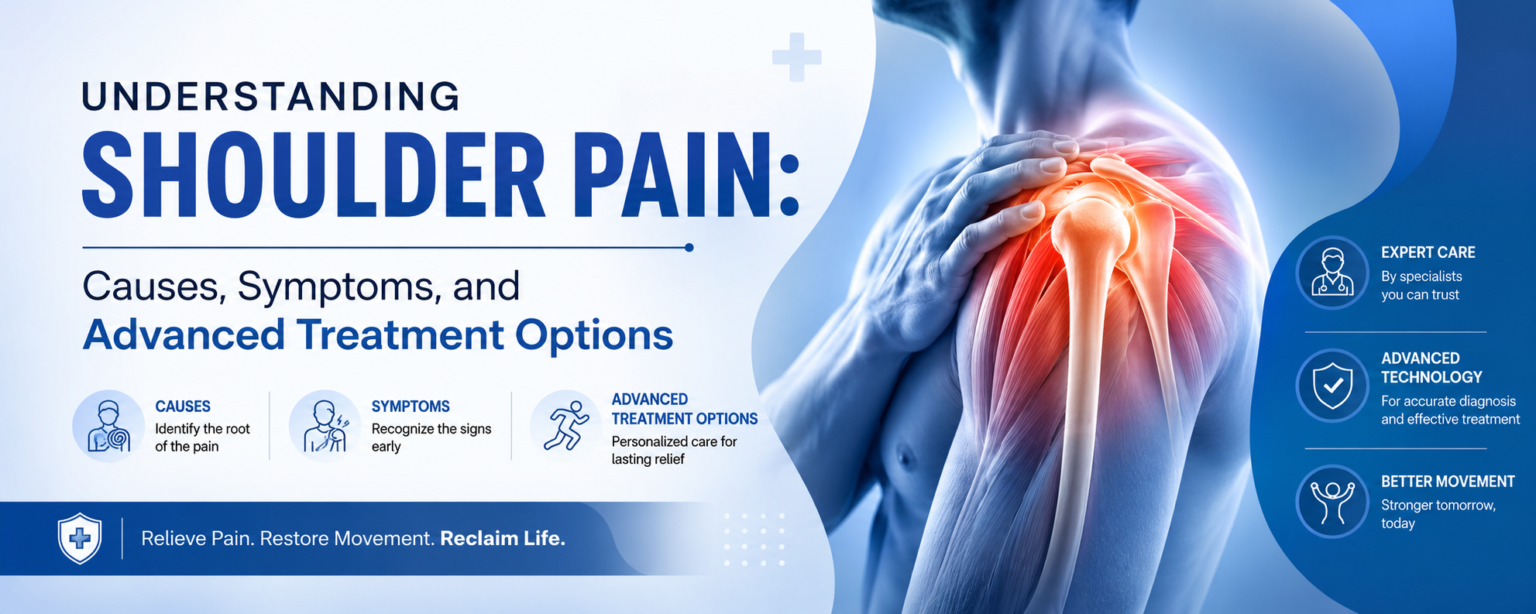
The shoulder joint is a ball-and-socket joint composed of three main bones: the humerus (upper arm bone), the scapula (shoulder blade), and the clavicle (collarbone). The head of the humerus fits into a shallow socket in the scapula called the glenoid. To maintain stability, a group of four muscles and their tendons, known as the rotator cuff, surround the joint, keeping the arm bone centered in the socket. Any damage to these structures, or the surrounding ligaments and bursa, can result in significant pain and restricted movement.
Common Causes of Shoulder Pain
Shoulder pain can arise from acute injuries, repetitive strain, or degenerative conditions. Here are the most common diagnoses we manage at our specialized orthopedic department:
1. Rotator Cuff Tendonitis and Tears
The rotator cuff is the most common source of shoulder pain. Tendonitis occurs when the tendons become inflamed due to overuse or age-related wear. If left untreated or subjected to sudden trauma, these tendons can partially or completely tear, leading to weakness and a dull ache deep in the shoulder.
2. Shoulder Impingement Syndrome
This condition occurs when the top of the shoulder blade (acromion) puts pressure on the underlying soft tissues when the arm is lifted. This friction leads to inflammation of the bursa (bursitis) and the rotator cuff tendons, causing sharp pain during overhead activities.
3. Frozen Shoulder (Adhesive Capsulitis)
Frozen shoulder is characterized by progressive stiffness and pain. The joint capsule thickens and tightens, severely restricting range of motion. This condition is particularly common in patients with diabetes or those recovering from a period of immobilization after surgery.
4. Osteoarthritis
Like any other joint, the shoulder is prone to ‘wear and tear’ arthritis. As the smooth cartilage that cushions the bones wears away, the bones begin to rub against each other, causing chronic pain, swelling, and a grinding sensation (crepitus).
5. Shoulder Instability and Dislocation
Instability occurs when the head of the upper arm bone is forced out of the shoulder socket. This can be a result of a sudden injury or long-term overuse of the ligaments. Chronic instability can lead to recurrent dislocations and an increased risk of developing arthritis later in life.
When to See an Orthopedic Specialist
While minor shoulder strain may resolve with rest, certain symptoms necessitate a professional evaluation at KK Swara Super Speciality Hospital. You should seek medical attention if you experience:
- Inability to carry objects or use the arm.
- Joint deformity or visible swelling.
- Shoulder pain that occurs at night or while resting.
- Pain that persists beyond a few weeks despite home care.
- A limited range of motion, such as the inability to raise your arm.
- Signs of infection, including fever or redness around the joint.
Diagnostic Protocols
Our orthopedic specialists utilize advanced diagnostic tools to pinpoint the exact cause of shoulder pain. The process typically begins with a thorough physical examination to test strength, stability, and range of motion. We may then employ imaging studies such as:
- X-rays: To identify bone spurs, fractures, or signs of arthritis.
- MRI (Magnetic Resonance Imaging): To provide detailed images of soft tissues like the rotator cuff and labrum.
- Ultrasound: To observe the tendons in motion and identify tears or inflammation.
Comprehensive Treatment Options
At KK Swara Super Speciality Hospital, we believe in a tiered approach to treatment, prioritizing conservative management before considering surgical intervention.
Non-Surgical Treatments
For many patients, non-invasive methods are highly effective:
- Physical Therapy: A tailored exercise program focuses on strengthening the stabilizing muscles and improving flexibility.
- Medications: Non-steroidal anti-inflammatory drugs (NSAIDs) help manage pain and reduce swelling.
- Corticosteroid Injections: For severe inflammation, targeted injections can provide significant, long-lasting relief.
- Regenerative Medicine: Treatments like Platelet-Rich Plasma (PRP) therapy can accelerate the natural healing process of injured tendons.
Surgical Interventions
If conservative treatments fail to provide relief after several months, or in cases of severe acute injury, surgery may be recommended. Our hospital specializes in minimally invasive techniques, including:
- Shoulder Arthroscopy: Using a small camera and tiny instruments, surgeons can repair torn tendons or remove inflamed tissue through small incisions. This leads to faster recovery and less post-operative pain.
- Rotator Cuff Repair: Reattaching the torn tendon to the humerus bone.
- Shoulder Replacement: For advanced arthritis, we offer total shoulder replacement or reverse shoulder replacement to restore function and eliminate pain.
Recovery and Rehabilitation
The key to a successful outcome, whether through conservative or surgical means, is dedicated rehabilitation. Recovery time varies depending on the severity of the condition and the type of procedure performed. Our physical therapy team works closely with patients to ensure they regain their strength safely and effectively, preventing future injuries.
Conclusion
Shoulder pain should never be ignored, as early intervention can prevent minor issues from becoming chronic conditions. At KK Swara Super Speciality Hospital, our team of expert orthopedic surgeons and therapists is committed to providing personalized care to help you return to your active lifestyle. If you are struggling with shoulder discomfort, schedule a consultation today to explore your options for a pain-free future.
This article is for general awareness only and is not a substitute for professional medical advice. Please consult a specialist at KK Swara Super Speciality Hospital for diagnosis and treatment.