5 Healthy Foods for Eyes
Your eyes work from the moment you wake up until you sleep. They help you read, drive, cook, work, and recognize the people you love. Looking after them is one of the most practical things you can do for your quality of life.
Nutrition is one part of that care. The retina, the light-sensing tissue at the back of the eye, relies on vitamins, minerals, and healthy fats from food. A balanced diet cannot guarantee perfect vision, but it supports the eye’s normal functioning and overall health. That is why eye-care experts often point to the same everyday foods: colorful vegetables, fruit, eggs, fish, and nuts.
In this guide, we look at 5 healthy foods for eyes: carrots, leafy greens, eggs, fatty fish, and citrus fruits. We also explain the nutrients behind them and how to fit them into an Indian diet. Just as important, we explain what food cannot do. It does not replace glasses, eye drops, surgery, or regular eye exams.
If you notice changes in your vision, don’t wait and don’t rely on diet alone. See an eye-care professional promptly. Residents of Boduppal, Uppal, and nearby areas of Hyderabad can start with a medical consultation at KK Swara Hospital Boduppal, which can guide you on next steps.
What Are the 5 Healthy Foods for Eyes?
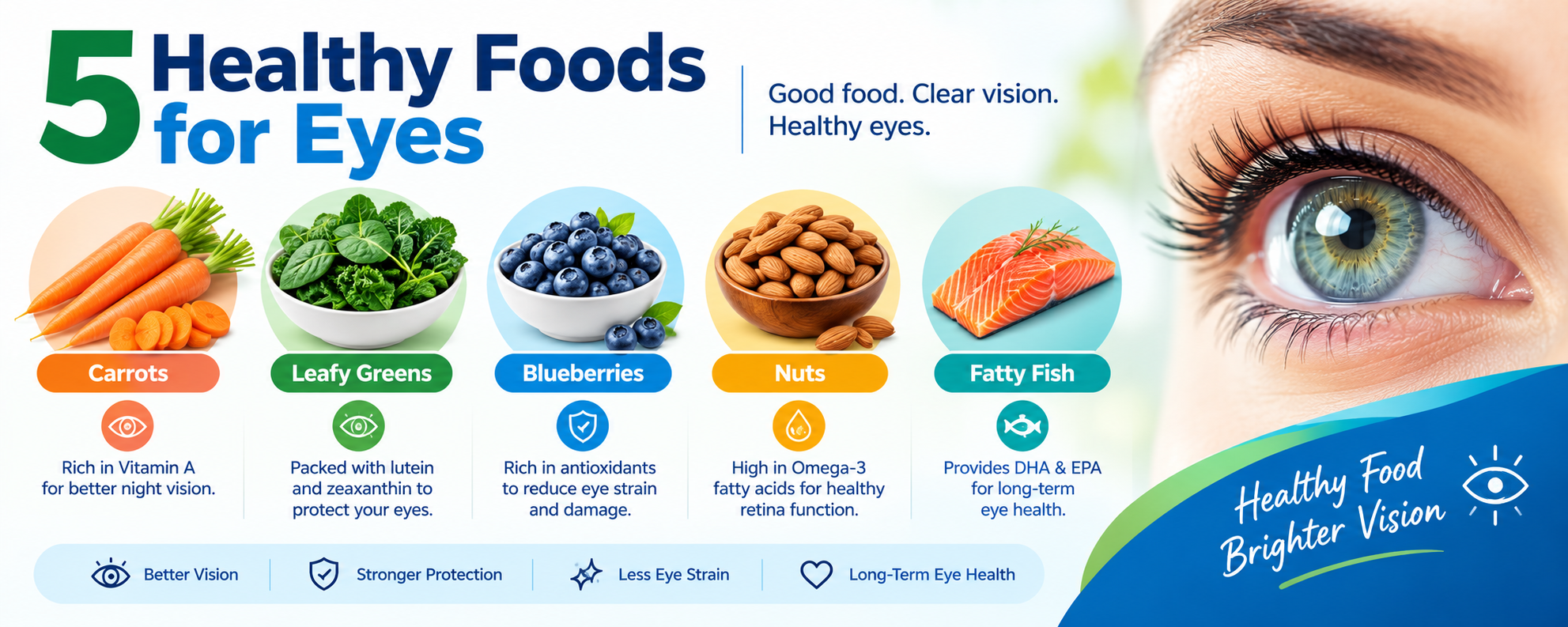
The 5 healthy foods for eyes are carrots, spinach and other leafy greens, eggs, fatty fish such as salmon, and citrus fruits such as oranges.
Each offers nutrients linked with eye health:
- Carrots: rich in beta-carotene, which the body converts to vitamin A
- Spinach and leafy greens: good sources of lutein, zeaxanthin, and vitamin C
- Eggs: contain lutein, zeaxanthin, vitamin A, and zinc
- Fatty fish such as salmon: provide omega-3 fatty acids, including DHA
- Citrus fruits such as oranges: rich in vitamin C, an antioxidant
These foods support overall eye health as part of a balanced diet. None of them cures or reverses an eye disease.
Why Nutrition Is Important for Eye Health
Nutrition matters for the eyes because specific vitamins, minerals, and fats help the retina, lens, and cornea function and protect them from everyday stress.
- Vitamin A: Needed for the light-sensing pigment in the retina and for a healthy cornea, the clear front surface of the eye. Severe deficiency can cause night blindness.
- Vitamin C: An antioxidant found in the fluid of the eye. It also supports blood vessels and collagen.
- Vitamin E: A fat-soluble antioxidant that helps protect cell membranes.
- Omega-3 fatty acids: DHA is a structural fat in the retina. Omega-3s may also support the tear film, though evidence for dry eye is mixed.
- Lutein and zeaxanthin: Plant pigments (carotenoids) that collect in the macula, the central part of the retina, and help filter blue light.
- Zinc: Helps carry vitamin A from the liver to the retina.
- Antioxidants: Compounds that neutralize unstable molecules called free radicals, which can damage cells over time.
These nutrients work best together, which is why variety on your plate matters more than any single food.
5 Healthy Foods for Eyes: Detailed Nutritional Benefits
1. Carrots
Carrots are rich in beta-carotene, a plant pigment the body turns into vitamin A, which supports vision in dim light and a healthy cornea.
- Key nutrients: Beta-carotene, vitamin C (small amounts), fibre
- Potential benefits: Supports vitamin A status. This is helpful if your diet is low in vitamin A.
- How to include: Raw in salads, grated into paratha or idli batter, in sambar or vegetable curries, or as carrot soup
- Serving ideas: A carrot-cucumber salad with lemon, or gajar sabzi with minimal oil
- Who may benefit: Anyone whose diet lacks colorful vegetables, including growing children
Carrots will not sharpen normal eyesight beyond what a healthy diet already provides. Their benefit is greatest when vitamin A intake is low.
2. Spinach and Other Leafy Greens
Spinach and leafy greens are among the best food sources of lutein and zeaxanthin, pigments found in the macula.
- Key nutrients: Lutein, zeaxanthin, vitamin C, vitamin E, beta-carotene, folate
- Potential benefits: Supply carotenoids that accumulate in the retina. Eating more of them may support long-term eye health.
- How to include: Palak dal, methi paratha, thotakura (amaranth) curry, sautéed greens, or greens in omelettes
- Serving ideas: A cup of cooked leafy greens at lunch, with a little oil to help carotenoid absorption
- Who may benefit: Adults, especially those in their 40s and above, and anyone with a low-vegetable diet
Other good choices include methi, sarson, broccoli, peas, and corn, along with other leafy greens commonly eaten in Telangana.
3. Eggs
Eggs contain lutein and zeaxanthin in a form that the body absorbs well because of the fat in the yolk, plus vitamin A and zinc.
- Key nutrients: Lutein, zeaxanthin, vitamin A, zinc, protein
- Potential benefits: Provide several eye-relevant nutrients in one food
- How to include: Boiled, scrambled with vegetables, in an omelette, or in egg curry
- Serving ideas: A vegetable omelette with spinach for breakfast
- Who may benefit: People who eat eggs and want a compact source of protein and eye-related nutrients
If you have high cholesterol, heart disease, or diabetes, ask your doctor how many eggs suit you. Vegetarians can rely on greens, dairy, and pulses instead.
4. Fatty Fish Such as Salmon
Fatty fish provide omega-3 fatty acids, including DHA, a major building block of the retina.
- Key nutrients: DHA and EPA (omega-3s), vitamin D, protein
- Potential benefits: Contribute to retinal structure and may help comfort in dry eye for some people, though study results vary
- How to include: Grilled, baked, or lightly curried fish, ideally two servings a week
- Serving ideas: Grilled salmon with sautéed greens, or sardine or mackerel curry. Local oily fish such as sardines and mackerel work well and are often more affordable than salmon.
- Who may benefit: Fish-eaters seeking more omega-3s in their diet
Vegetarians can include walnuts, flaxseed, and chia seeds, which provide a different omega-3 (ALA), though the body converts it to DHA only in small amounts. Choose fish prepared with little oil rather than deep-fried.
5. Citrus Fruits Such as Oranges
Citrus fruits are rich in vitamin C, an antioxidant present in the eye’s fluids and important for blood vessels.
- Key nutrients: Vitamin C, flavonoids, fibre
- Potential benefits: Support the body’s antioxidant defences and healthy capillaries in the eye
- How to include: Whole fruit, fruit chaat, lemon in dal and salads, or with a meal to help iron absorption
- Serving ideas: An orange or sweet lime (mosambi) as a mid-morning snack
- Who may benefit: Anyone whose diet is low in fresh fruit
Amla (Indian gooseberry), guava, and bell peppers are also rich in vitamin C. Choose whole fruit over juice to get fibre and avoid added sugar.
Other Foods That May Support Eye Health
Many other nutrient-rich foods can round out an eye-friendly diet.
- Nuts and seeds: Almonds, sunflower seeds, and walnuts give vitamin E and healthy fats
- Sweet potatoes: High in beta-carotene
- Bell peppers: Rich in vitamin C
- Broccoli: Contains lutein, vitamin C, and other antioxidants
- Avocado: Provides healthy fats that help absorb carotenoids
- Legumes: Chana, rajma, and dal give zinc and protein
- Dairy products: Milk, curd, and paneer provide vitamin A and zinc
Eating a mix of these foods is more useful than focusing on one “superfood.”
Foods to Limit for Better Overall Eye Health
Limiting highly processed, sugary, salty, and fried foods supports overall health, which in turn supports the eyes.
- Highly processed foods: Often high in salt, sugar, and unhealthy fats
- Excessive sugary foods and sugary beverages: Over time, they contribute to weight gain and diabetes, which can damage retinal blood vessels
- Excessive salt: Can raise blood pressure, which can affect the small vessels in the eye
- Trans fats and excessive fried foods: Linked with poor heart and metabolic health
These foods are not shown to directly cause eye diseases in everyone. The concern is the chain through weight, diabetes, and blood pressure, all of which affect the eyes. Enjoying them occasionally is fine.
Can Food Improve Eyesight?
No. Food supports healthy eyes but cannot correct refractive errors or treat eye disease.
It helps to separate four ideas:
- Supporting healthy eyes: A balanced diet gives the eyes the nutrients they need.
- Maintaining normal vision: Adequate nutrition, especially vitamin A, helps keep normal function.
- Correcting refractive errors: Nearsightedness, farsightedness, astigmatism, and presbyopia (age-related near-vision difficulty) need glasses, contact lenses, or sometimes surgery, not food.
- Treating an eye disease: Conditions such as cataract, glaucoma, diabetic retinopathy, and macular degeneration need medical care.
Research shows the limits and the possibilities. In large National Eye Institute trials (AREDS and AREDS2), specific supplement formulas lowered the risk of progression from intermediate to advanced age-related macular degeneration by about 25 percent, but they did not prevent the disease from starting. Adding omega-3s or lutein plus zeaxanthin to the AREDS formula had no extra overall effect on advanced AMD risk. These supplements are for people already diagnosed with intermediate AMD under an eye doctor’s guidance, not for everyone. nihnih
Best Vitamins and Nutrients for Eye Health
Nutrient | Food Sources | Role in Eye Health |
Vitamin A | Carrots, sweet potato, leafy greens, eggs, dairy, mango, papaya | Supports vision in low light and the surface of the eye |
Vitamin C | Oranges, mosambi, amla, guava, bell peppers | Antioxidant; supports blood vessels and collagen |
Vitamin E | Almonds, sunflower seeds, vegetable oils | Antioxidant that helps protect cell membranes |
Omega-3 | Salmon, sardines, mackerel, walnuts, flaxseed | DHA is part of retinal structure |
Lutein | Spinach, methi, kale, broccoli, peas, egg yolk | Concentrates in the macula and filters blue light |
Zeaxanthin | Leafy greens, corn, egg yolk, orange peppers | Works with lutein in the macula |
Zinc | Pulses, nuts, seeds, dairy, eggs, meat | Helps carry vitamin A to the retina |
Eye-Friendly Daily Diet Plan
This is a simple one-day example. Adjust it to your tastes, culture, and medical needs.
Meal | Sample Menu |
Breakfast | Vegetable and spinach omelette (or besan chilla with greens), whole-wheat toast, an orange |
Mid-morning snack | Guava or mosambi, plus a few soaked almonds |
Lunch | Roti or millet, palak or methi dal, carrot-cucumber salad, a bowl of curd |
Evening snack | Roasted chana or a small handful of walnuts, with unsweetened tea |
Dinner | Grilled or curried fish (or paneer or tofu), sautéed leafy greens, baked sweet potato |
Drink enough water through the day.
Individual nutritional needs vary. If you have diabetes, kidney disease, high cholesterol, allergies, or another medical condition, consult a qualified healthcare professional or dietitian before changing your diet.
5 Healthy Foods for Eyes for Children
Children benefit from a varied diet that includes these foods in age-appropriate forms.
- Carrots: Cooked or grated for younger children, since raw chunks can be a choking hazard
- Leafy greens: Pureed into dal, added to parathas, or blended into soups
- Eggs: A good protein for most children. Introduce them as your pediatrician advises, especially if allergy runs in the family.
- Fish: Soft, boneless, and well-cooked, if your family eats fish
- Citrus fruits: Orange or mosambi segments as snacks
A balanced diet supports growth and eye health, but it does not replace pediatric or eye-care evaluation. See an eye doctor if your child squints, sits very close to screens, rubs their eyes often, or complains of headaches. Don’t give vitamin A supplements without medical advice, because too much can be harmful. Outdoor play is also linked with a lower risk of developing nearsightedness.
5 Healthy Foods for Eyes for Adults
Adults can build these foods into daily meals while keeping other habits in check.
- Add a serving of leafy greens to lunch or dinner
- Eat fish once or twice a week
- Choose a whole fruit, such as an orange, daily
- Include eggs or pulses for protein
- Use carrots and other colorful vegetables in salads and curries
Nutrition is only part of adult eye care. Get regular eye examinations, especially if you have diabetes, high blood pressure, or a family history of eye disease. These conditions can affect the retina and optic nerve without early symptoms. People with diabetes are usually advised to have a dilated retinal exam at least once a year, or as their doctor recommends.
Foods for Healthy Eyes After Age 40
After 40, preventive eye care becomes more important, and a nutrient-rich diet supports overall eye health.
Many people notice trouble with close-up reading (presbyopia) in their 40s. The risk of cataract, glaucoma, and macular degeneration also rises with age.
- Keep eating leafy greens, colorful vegetables, fruit, fish, eggs, and nuts
- Stay hydrated and limit salt and added sugar
- Avoid smoking, which is linked with several eye conditions
- Schedule a comprehensive eye exam, and follow your eye doctor’s advice on how often to return
- Ask your doctor before starting any eye supplement
When Should You See an Eye Doctor?
See an eye doctor promptly for sudden or persistent changes in your vision or eyes.
Seek evaluation for:
- Sudden vision changes or loss of vision
- Blurred vision that persists
- Persistent eye pain
- Double vision
- Flashes of light
- A sudden increase in floaters
- Persistent redness or irritation
Seek urgent care immediately for sudden vision loss, a curtain-like shadow, eye injury, chemical splash, or severe eye pain with nausea. Symptoms alone cannot tell which condition is present, so an examination is essential. Nutrition cannot replace it.
Eye Health and Lifestyle Habits
Healthy eyes depend on habits as well as diet.
- Regular eye examinations: They can detect problems early
- Manage diabetes and blood pressure: Both can damage the retina
- Adequate sleep: Gives the eyes time to rest
- Stay hydrated: Supports overall comfort
- Take screen breaks: Try the 20-20-20 rule: every 20 minutes, look at something 20 feet away for 20 seconds
- Wear sunglasses outdoors: Choose lenses that block UV rays
- Avoid smoking: It raises the risk of several eye diseases
- Maintain a healthy weight: Lowers the risk of diabetes and high blood pressure
- Follow professional medical advice: Use drops and medicines exactly as prescribed
Role of Diet in Preventing Eye Problems
Diet is one piece of a bigger picture: it works alongside medical care, healthy habits, and regular eye examinations.
A balanced diet supports heart health, healthy blood sugar, and healthy blood pressure, which all protect the small blood vessels in the eyes. Good nutrition can help maintain normal eye function. However, many eye conditions, including refractive errors, glaucoma, and some retinal diseases, are not caused by poor diet and cannot be treated by diet.
One clear example is vitamin A deficiency. Xerophthalmia, the eye disease caused by vitamin A deficiency, is a leading cause of preventable childhood blindness, and night blindness is its earliest sign. This is why adequate vitamin A intake matters, especially for children, and why public health programmes address it. Outside deficiency, there is little proof that extra vitamins improve healthy eyes. nih
Why Choose KK Swara Hospital Boduppal for Healthcare?
KK Swara Hospital Boduppal is a healthcare option in Boduppal, Hyderabad, for people who want professional guidance close to home. Patients can expect:
- Patient-centered healthcare: time to discuss your concerns and questions
- Experienced healthcare professionals: a medical team to assess your symptoms
- Comprehensive healthcare support: consultations and general medical care
- Diagnostic and medical support: investigations when your doctor advises
- Convenient access in Boduppal, Hyderabad: care close to home for residents of Boduppal, Uppal, and nearby areas
- Professional guidance: advice on health concerns, including when to see a specialist
For eye symptoms, a medical consultation can help decide what to do next, including referral to a suitable eye-care professional where needed. No hospital can guarantee outcomes. (Verify each service against the hospital’s official information. If eye-care services are available, add them with verified details before publishing.)
You can book a consultation or explore our health checkup packages.
Research and Statistics at a Glance
- AMD supplements (NEI, AREDS/AREDS2): The studies found that taking the AREDS or AREDS2 supplements reduces the risk of progression from intermediate to advanced AMD by about 25 percent, and the supplements do not prevent AMD from starting. nih
- Who these results apply to: AREDS2 enrolled only people with intermediate AMD in both eyes, or intermediate AMD in one eye and advanced AMD in the other. The findings do not apply to people with healthy eyes. nih
- Vitamin A deficiency (StatPearls review): A large share of children with vitamin A deficiency live in South and Southeast Asia, which is why food-based and public health measures matter. nih
- Individual variation: These are group-level findings. Your own needs depend on your health and an eye examination.
Key Takeaways
- The 5 foods: Carrots, leafy greens, eggs, fatty fish, and citrus fruits supply nutrients such as vitamin A, lutein, zeaxanthin, omega-3s, and vitamin C.
- Variety wins: A balanced diet with colorful vegetables, fruit, pulses, nuts, and fish supports eye health better than any single food.
- Food has limits: Diet cannot correct refractive errors or treat eye disease, and it does not replace glasses, medicines, or eye exams.
- Protect your whole health: Managing diabetes and blood pressure, not smoking, and taking screen breaks all help your eyes.
- Don’t delay care: Sudden vision changes, eye pain, flashes, or new floaters need prompt professional evaluation.
FAQ Section
- What are the 5 healthy foods for eyes?
Carrots, spinach and other leafy greens, eggs, fatty fish such as salmon, and citrus fruits such as oranges. They provide vitamin A, lutein, zeaxanthin, omega-3 fatty acids, and vitamin C. - Which food is best for eye health?
No single food is best. Leafy greens are among the top sources of lutein and zeaxanthin, but a varied diet that includes fruit, vegetables, eggs, fish, and nuts supports eye health best. - Can food improve eyesight?
Food supports healthy eyes but can’t fix refractive errors such as nearsightedness or treat eye disease. Glasses, contact lenses, and medical care do that. Good nutrition helps maintain normal eye function. - Which vitamin is best for healthy eyes?
Vitamin A is essential for vision and a healthy cornea, but eyes also need vitamins C and E, zinc, lutein, zeaxanthin, and omega-3s. Most people get enough from a balanced diet. - Are carrots really good for your eyes?
Yes, as part of a healthy diet. Carrots supply beta-carotene, which the body converts to vitamin A. They help most when vitamin A intake is low, and they won’t improve normal vision beyond that. - Which fruits are good for eye health?
Oranges, mosambi, amla, and guava provide vitamin C. Papaya and mango offer vitamin A precursors. Eating a variety of colorful fruits supports overall eye health. - What foods are rich in lutein and zeaxanthin?
Spinach, methi, kale, broccoli, peas, corn, and egg yolks. Eating them with a little healthy fat helps the body absorb these pigments. - Can omega-3 fatty acids support eye health?
Omega-3s, especially DHA, are part of the retina, and fish are a good source. Evidence for supplements in dry eye and macular degeneration is mixed, so ask an eye doctor before taking them. - What should I eat to keep my eyes healthy?
Eat leafy greens, colorful vegetables, fruit, eggs, fish, nuts, and pulses, and limit processed, sugary, salty, and fried foods. Also get regular eye exams. - When should I see an eye doctor?
See one promptly for sudden vision changes, vision loss, persistent blurred or double vision, eye pain, flashes of light, sudden new floaters, or persistent redness. Get routine exams as advised, especially if you have diabetes or are over 40.
Conclusion
A balanced diet is a simple, everyday way to care for your eyes. The 5 healthy foods for eyes, carrots, leafy greens, eggs, fatty fish, and citrus fruits, supply nutrients that support the retina and overall eye health. Variety, moderate portions, and fewer processed foods matter more than any single “superfood.”
Food has limits, though. It does not replace glasses, medicines, or regular eye exams, and it cannot treat eye disease. If you have persistent or concerning symptoms, such as blurred vision, pain, flashes, or sudden changes, get professional advice without delay.
Make these foods part of your daily routine, look after your overall health, and have your eyes checked regularly. If you live in Boduppal or elsewhere in Hyderabad and have a health concern, you can consult KK Swara Hospital Boduppal for guidance on your next steps.
This article is for general awareness only and is not a substitute for professional medical advice. Please consult a specialist at KK Swara Super Speciality Hospital for diagnosis and treatment.