How to Prevent a Cardiac Attack: A Practical Guide for Boduppal and Beyond
A cardiac attack, also called a heart attack or myocardial infarction, happens when blood flow to part of the heart muscle is suddenly blocked. Without oxygen-rich blood, that part of the muscle begins to get damaged. The faster blood flow is restored, the more heart muscle can be saved.
Most heart attacks happen because fatty deposits (plaque) build up in the coronary arteries over many years. A plaque can crack, a blood clot forms on it, and the artery closes. This slow build-up is called atherosclerosis, and it is why prevention works. You can influence much of the process long before any symptoms appear.
Major risk factors include high blood pressure, high cholesterol, diabetes, obesity, smoking, physical inactivity, an unhealthy diet, stress, family history, and age. Heart health awareness matters in India because these risk factors are widespread, and heart disease often affects people at younger ages than many expect.
The good news is that lifestyle changes, regular checkups, and properly taken medicines can lower risk substantially. If you ever have chest pain, pressure, or other warning signs, treat it as an emergency and call for help immediately. This article is general education, not personal medical advice.
What Is a Cardiac Attack?
A cardiac attack (heart attack) is a medical emergency in which a blocked coronary artery cuts off blood supply to part of the heart muscle.
The coronary arteries are the vessels that feed the heart itself. When plaque narrows them, the heart may get less blood during exertion. If a plaque ruptures and a clot blocks the artery completely, a heart attack occurs.
Heart attack vs cardiac arrest:
- Heart attack: A circulation problem. The heart is still beating, but part of it is starved of blood.
- Cardiac arrest: An electrical problem. The heart suddenly stops pumping effectively, and the person collapses and stops breathing normally.
A heart attack can trigger cardiac arrest, but they are not the same. Common causes and risk factors are covered below.
How to Prevent a Cardiac Attack
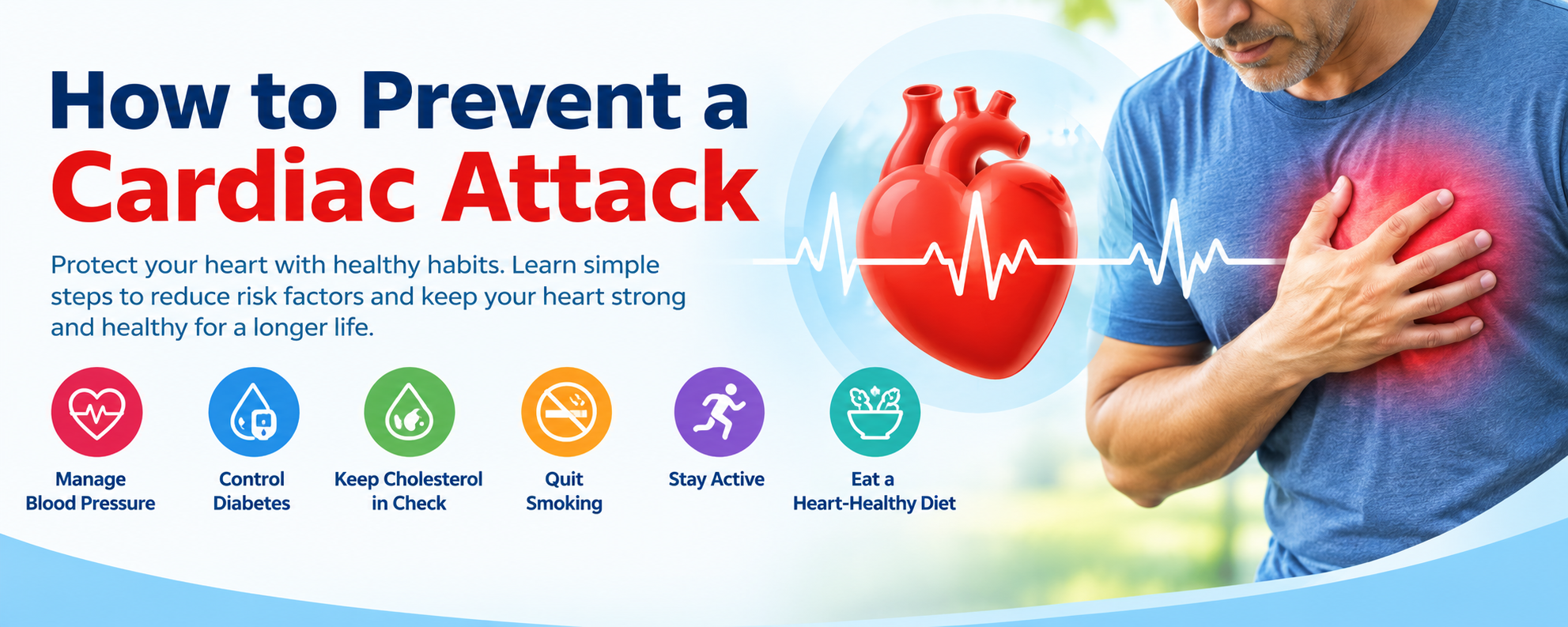
To prevent a cardiac attack, control the risk factors you can: eat well, move regularly, avoid tobacco, manage blood pressure, cholesterol, and blood sugar, and see your doctor for regular checkups.
Here are 12 practical strategies:
- Eat a healthy diet: More vegetables, fruit, whole grains, and pulses; less salt, sugar, and fried food.
- Control blood pressure: Check it regularly and follow your doctor’s plan.
- Manage cholesterol: Know your levels, and treat them if your doctor advises.
- Control blood sugar: Especially important if you have diabetes or prediabetes.
- Maintain a healthy weight: Pay attention to waist size as well as weight.
- Exercise regularly: Aim for steady, moderate activity most days.
- Quit smoking and tobacco: This includes bidis and smokeless tobacco.
- Limit alcohol: Less is better, and if you don’t drink, there’s no need to start.
- Manage stress: Build in rest, movement, and support.
- Get adequate sleep: Most adults need about seven to nine hours.
- Have regular health checkups: Catch silent problems early.
- Take prescribed medicines correctly: Never stop or change a dose without your doctor’s advice.
Do not start daily aspirin on your own for prevention. It carries bleeding risks and is only appropriate when a doctor recommends it.
Major Risk Factors for Heart Attack
Risk factors fall into two groups: those you can change (modifiable) and those you cannot.
Modifiable or manageable:
- High blood pressure
- High cholesterol
- Diabetes
- Obesity
- Smoking
- Physical inactivity
- Unhealthy diet
- Chronic stress
Not modifiable:
- Family history of early heart disease
- Age
- Previous heart disease (which raises the need for ongoing care)
Having several risk factors together raises risk more than any one alone. That is also why improving even a few of them helps.
Warning Signs of a Heart Attack
The classic warning sign is chest pressure, tightness, or pain, but symptoms vary.
Common signs include:
- Chest pressure, pain, or discomfort lasting more than a few minutes, or coming and going
- Pain spreading to the arm, shoulder, back, neck, or jaw
- Shortness of breath
- Cold sweat
- Nausea or vomiting
- Dizziness or light-headedness
- Unusual tiredness
Symptoms can differ between people. Women, older adults, and people with diabetes may have less typical symptoms, such as breathlessness, nausea, back or jaw pain, or fatigue, sometimes without obvious chest pain.
When to seek emergency care: If you suspect a heart attack, call an ambulance (108 or 112) right away. Don’t drive yourself, and don’t wait to see if it passes. An emergency team may advise you to chew an aspirin, but follow their instructions and don’t delay the call. Time is heart muscle.
Heart-Healthy Diet to Reduce Heart Attack Risk
A heart-healthy diet is rich in plants, whole grains, and healthy fats, and low in salt, added sugar, trans fats, and ultra-processed food.
- Fruits and vegetables: Aim for a variety every day, including leafy greens, gourds, carrots, tomatoes, and seasonal fruit.
- Whole grains: Choose whole-wheat roti, millets (ragi, jowar, bajra), oats, and brown or red rice in measured portions.
- Pulses and legumes: Dal, rajma, chana, moong, and sprouts give protein and fibre.
- Nuts and seeds: A small handful of almonds, walnuts, or groundnuts is enough.
- Healthy protein: Pulses, curd, eggs in moderation, fish, and skinless poultry.
- Healthy fats: Use small amounts of groundnut, mustard, rice bran, or olive oil. Keep ghee moderate.
- Limit salt: WHO advises under 5 grams (about a teaspoon) a day, including salt in pickles, papad, and namkeen.
- Reduce added sugar: Cut back on sweets, sugary tea, and cold drinks.
- Avoid trans fats: Be wary of vanaspati, reused frying oil, and some bakery items.
- Limit highly processed foods: Packaged snacks, instant noodles, and fried street food.
Hyderabadi favourites such as biryani and haleem can fit occasionally in moderate portions, with more vegetables and raita on the side.
Exercise and Physical Activity for Heart Health
Regular moderate activity, such as 30 minutes of brisk walking on most days, helps the heart and circulation.
WHO and heart associations suggest at least 150 minutes of moderate activity a week for adults, or equivalent vigorous activity.
- Walking: The easiest start; build up pace and distance gradually.
- Cycling: Gentle on the joints and good for stamina.
- Swimming: A full-body option.
- Strength training: Two days a week supports muscle, weight, and blood sugar control.
- General activity: Stairs, gardening, and housework all count.
- Less sitting: Stand and move for a few minutes every 30 to 60 minutes.
If you have heart disease, high blood pressure, diabetes, or you’re over 40 and have been inactive, talk to your doctor about suitable exercise before starting. Stop and seek help for chest pain or unusual breathlessness during exercise.
How to Control Blood Pressure and Cholesterol
High blood pressure strains the heart and arteries, and high LDL (“bad”) cholesterol feeds plaque build-up, so controlling both lowers heart attack risk.
Both can be silent for years. What helps:
- Regular monitoring: Check blood pressure at home or at a clinic, and get a lipid profile as advised.
- Diet: Less salt, less saturated and trans fat, more fibre.
- Exercise: Regular activity lowers pressure and improves cholesterol.
- Weight management: Even modest weight loss helps both.
- Medication adherence: If prescribed, take medicines every day, even when you feel well.
- Regular medical consultations: Your doctor sets your personal targets and adjusts treatment.
Never stop blood pressure or cholesterol medicines without medical advice.
Diabetes and Heart Attack Prevention
Diabetes raises the risk of heart attack because high blood sugar damages blood vessels over time.
People with diabetes often also have high blood pressure and abnormal cholesterol, which compounds the risk. Heart attacks in people with diabetes can be “silent” or have unusual symptoms.
Helpful steps include keeping blood sugar within the range your doctor sets, taking medicines as prescribed, eating balanced meals, staying active, and getting regular checks of blood pressure, cholesterol, kidneys, and eyes. Prediabetes also deserves attention, since lifestyle changes can slow progression.
Smoking and Heart Health
Smoking damages blood vessels, promotes clots, and raises heart attack risk, and quitting lowers that risk.
All tobacco matters, including cigarettes, bidis, hookah, and smokeless tobacco. Second-hand smoke also harms the heart.
Heart risk starts falling soon after quitting and keeps declining over the following years. Support improves success: ask your doctor about counselling and medicines, and consider the national tobacco quit-line (1800-11-2356).
Stress, Sleep, and Heart Health
Chronic stress and poor sleep can raise blood pressure and encourage unhealthy habits, which add to heart risk.
Practical stress management:
- Take short breaks and walks during the day
- Try slow breathing, yoga, or meditation
- Keep time for family, friends, and hobbies
- Talk to a professional if stress or low mood persists
Sleep hygiene:
- Keep regular sleep and wake times
- Avoid screens and caffeine late in the evening
- Keep the bedroom dark and cool
- If you snore loudly or feel tired despite enough sleep, ask your doctor about sleep apnea
Regular Heart Health Checkups
Regular checkups find silent risk factors early, when they are easiest to manage. Key measurements include:
- Blood pressure: At least yearly for adults, more often if high
- Blood sugar: Fasting glucose or HbA1c, as your doctor advises
- Cholesterol: A lipid profile, typically starting in the 30s, or earlier with risk factors
- Weight, BMI, and waist size
- Family history: Tell your doctor about heart attacks, strokes, or sudden death in relatives, especially early in life
Extra tests such as an ECG, echocardiogram, treadmill test, or calcium score are not needed for everyone. Your doctor will recommend them based on your symptoms and risk. For general checkups, see our health checkup packages.
Can a Heart Attack Be Prevented?
Yes, many heart attacks can be prevented, or their risk substantially reduced, by addressing modifiable risk factors. No strategy can guarantee zero risk.
Eating well, staying active, avoiding tobacco, and controlling blood pressure, cholesterol, and blood sugar all lower risk. Even people with a family history can reduce their risk by managing what they can control. Regular checkups and treatment where needed add further protection.
Heart Attack Prevention for Different Age Groups
Heart risk depends on many factors, not age alone, but priorities shift with life stage.
- Young adults: Build habits early: avoid tobacco and vaping, stay active, eat well, sleep enough, and know your family history.
- Adults aged 30 to 45: Start regular blood pressure, sugar, and cholesterol checks, and watch weight and waist size. Work stress and long sitting hours often creep in here.
- Adults aged 45 to 60: Risk rises, so monitoring matters more. Treat high blood pressure, cholesterol, and diabetes consistently and discuss your overall risk with a doctor.
- Older adults: Stay active at a safe level, take medicines correctly, and review them regularly. Know the warning signs, which may be less typical.
South Asians often develop heart disease earlier than many other groups, so young adults with risk factors shouldn’t assume they are too young to be at risk.
Heart Attack Prevention for People With Diabetes, High BP, or High Cholesterol
If you already have one of these conditions, professional care plus healthy habits is the best protection.
- See your doctor regularly and agree on personal targets
- Take medicines exactly as prescribed, and never stop them on your own
- Monitor blood pressure, blood sugar, and cholesterol at the recommended intervals
- Follow a heart-healthy diet and stay active
- Quit tobacco and limit alcohol
- Report symptoms promptly: chest discomfort, breathlessness, or unusual fatigue
Good control of these conditions lowers your risk, but it doesn’t remove it, so awareness of warning signs stays important.
Why Heart Health Awareness Is Important in Hyderabad
In a fast-paced city like Hyderabad, long working hours, sitting jobs, and convenience food can raise heart risk without people noticing.
Awareness helps people check their blood pressure, sugar, and cholesterol, act on warning signs, and reach care quickly. Residents of Boduppal, Uppal, Peerzadiguda, Medipally, and nearby areas can look for preventive checkups and timely evaluation close to home. A nearby doctor also makes ongoing follow-up easier.
Patients can consult KK Swara Hospital Boduppal for general medical consultations and health checkups. For heart-specific emergencies, go to the nearest hospital with emergency care. If you search for cardiac care in Hyderabad, check which services each hospital provides. Learn more about our health checkups.
Why Choose KK Swara Hospital Boduppal for Heart Health Care?
KK Swara Hospital Boduppal is a healthcare option in Boduppal, Hyderabad, for people who want preventive guidance and medical consultations close to home. Patients can expect:
- Access to healthcare services: consultations and diagnostic support in the local area
- Preventive health awareness: guidance on risk factors, diet, and lifestyle
- Medical consultations: discussion of your symptoms, history, and risk
- Health monitoring: checks of blood pressure, sugar, cholesterol, and weight
- Patient-focused care: clear explanations and follow-up planning
- Timely evaluation of concerning symptoms: assessment and guidance on next steps
No hospital can guarantee outcomes. (Verify each service against the hospital’s official information and add confirmed departments, emergency services, and doctor details before publishing.) Learn more on our general medicine page or book a consultation.
Heart Attack Risk Factors Table
Risk Factor | Modifiable? | How It Affects Risk |
Smoking | Yes | Damages artery walls and promotes clots |
High BP | Yes | Strains the heart and injures arteries over time |
High cholesterol | Yes | Excess LDL builds plaque in coronary arteries |
Diabetes | Yes/Manageable | High sugar damages blood vessels and speeds plaque build-up |
Obesity | Yes/Manageable | Raises blood pressure, sugar, and cholesterol |
Family history | No | Suggests inherited risk; makes monitoring more important |
Age | No | Arteries stiffen and plaque accumulates over time |
Physical inactivity | Yes | Contributes to weight gain, high BP, and poor blood sugar control |
Heart-Healthy Habits Table
Healthy Habit | Potential Benefit |
Regular physical activity | Strengthens the heart and helps control weight, BP, and sugar |
Balanced diet | Supports healthy cholesterol, blood pressure, and weight |
Not smoking | Reduces artery damage and clotting risk |
Blood pressure control | Reduces strain on the heart and arteries |
Cholesterol management | Slows plaque build-up |
Diabetes management | Protects blood vessels from sugar-related damage |
Healthy weight | Lowers load on the heart and improves risk markers |
Adequate sleep | Supports blood pressure, mood, and appetite regulation |
Stress management | May ease blood pressure and unhealthy coping habits |
Statistics and Trends
- Global burden (WHO, 2022): An estimated 19.8 million people died from cardiovascular diseases in 2022, about 32% of all deaths worldwide, and 85% of these were due to heart attack and stroke. who
- Behavioural risks (WHO): Unhealthy diet, physical inactivity, tobacco use, and harmful alcohol use are the most important behavioural risk factors. who
- Prevention potential (WHO): A large number of heart attacks and strokes can be prevented by controlling major risk factors through lifestyle changes and, where needed, medicines. world-heart-federation
- India’s metabolic risk factors (ICMR-INDIAB, published 2023): A national survey found diabetes in 11.4% and hypertension in 35.5% of adults, with generalised obesity at 28.6% and abdominal obesity at 39.5%. Abnormal blood lipids (dyslipidaemia) affected 81.2%. udayavaniudayavani
- India in absolute numbers (ICMR-INDIAB): The study estimated 101 million people with diabetes, 136 million with prediabetes, and 315 million with hypertension in India. morungexpress
- Study population: The survey covered 113,043 adults aged 20 and older across 31 states and union territories. biospectrumindia
- Overall risk (INTERHEART study, 2004, 52 countries): Nine modifiable factors were linked with roughly 90% of the population-level risk of a first heart attack. Verify before publishing.
- Individual variation: These are population figures. They do not predict any one person’s risk.
FAQ Section
- How can I prevent a cardiac attack?
Manage the risk factors you can control: eat a heart-healthy diet, stay active, avoid tobacco, limit alcohol, keep a healthy weight, and control blood pressure, cholesterol, and blood sugar. Get regular checkups and take prescribed medicines correctly. - What are the main causes of a heart attack?
Most heart attacks result from plaque build-up in the coronary arteries, which can rupture and form a clot. High blood pressure, high cholesterol, diabetes, smoking, obesity, inactivity, and family history raise the risk. - Can a heart attack be prevented naturally?
Healthy lifestyle habits can substantially lower risk, but they can’t guarantee prevention. If you have high blood pressure, cholesterol, or diabetes, you may also need medicines alongside lifestyle changes. - What foods help prevent heart attacks?
Vegetables, fruit, whole grains, millets, pulses, nuts, fish, and healthy oils in moderation help. Limit salt, sugar, fried and processed foods, and trans fats. - Does exercise reduce the risk of a heart attack?
Yes. Regular moderate activity, such as about 150 minutes of brisk walking a week, helps control weight, blood pressure, and blood sugar. If you have a health condition, check with your doctor first. - Can high blood pressure cause a heart attack?
Yes. High blood pressure strains the heart and injures the arteries, which promotes plaque build-up. It often has no symptoms, so regular checks matter. - Does high cholesterol increase heart attack risk?
Yes. High LDL cholesterol contributes to plaque in the coronary arteries. Diet, exercise, and, where advised, medicines can bring it down. - Can diabetes increase the risk of a heart attack?
Yes. Diabetes damages blood vessels and often comes with other risk factors. Good blood sugar control and regular checkups lower the risk. - What are the early warning signs of a heart attack?
Chest pressure or discomfort, pain spreading to the arm, jaw, neck, or back, breathlessness, cold sweat, nausea, dizziness, or unusual tiredness. Women, older adults, and people with diabetes may have milder or atypical symptoms. - When should I seek emergency medical help for chest pain?
Call an ambulance (108 or 112) immediately if chest pain or pressure lasts more than a few minutes, spreads to the arm or jaw, or comes with breathlessness, sweating, or nausea. Don’t drive yourself.
Key Takeaways
- Control what you can: Healthy diet, regular activity, no tobacco, limited alcohol, and a healthy weight lower heart attack risk.
- Know your numbers: Blood pressure, cholesterol, and blood sugar often cause no symptoms, so regular checks matter.
- Take treatment seriously: If you have diabetes, high blood pressure, or high cholesterol, follow your doctor’s plan and never stop medicines on your own.
- Rest and recovery count: Adequate sleep and stress management support long-term heart health.
- Act fast on warning signs: Chest pressure, spreading pain, or breathlessness need an immediate emergency call, since no prevention plan guarantees zero risk.
Conclusion
Learning how to prevent a cardiac attack comes down to steady, practical habits. A healthy lifestyle, good control of blood pressure, cholesterol, and blood sugar, and regular health monitoring all work together to lower risk. Recognizing warning signs early and seeking emergency care without delay can protect heart muscle when a problem does occur.
No plan can promise zero risk, so professional medical guidance matters, especially if you have a family history or existing conditions. Small changes, such as a daily walk, less salt, and a yearly checkup, add up over time.
If you live in Boduppal or elsewhere in Hyderabad, make your heart health a priority this year. Consult KK Swara Hospital Boduppal when you need appropriate medical evaluation or guidance, and call emergency services immediately if you have symptoms of a heart attack.
This article is for general awareness only and is not a substitute for professional medical advice. Please consult a specialist at KK Swara Super Speciality Hospital for diagnosis and treatment.