Bone TB Symptoms: Early Signs, Causes, Diagnosis and Treatment
Bone TB is tuberculosis that infects bones or joints instead of, or in addition to, the lungs. It is also called skeletal tuberculosis or tuberculosis of bone. Because it starts quietly, Bone TB symptoms are often mistaken for arthritis, a sprain, or ordinary back pain.
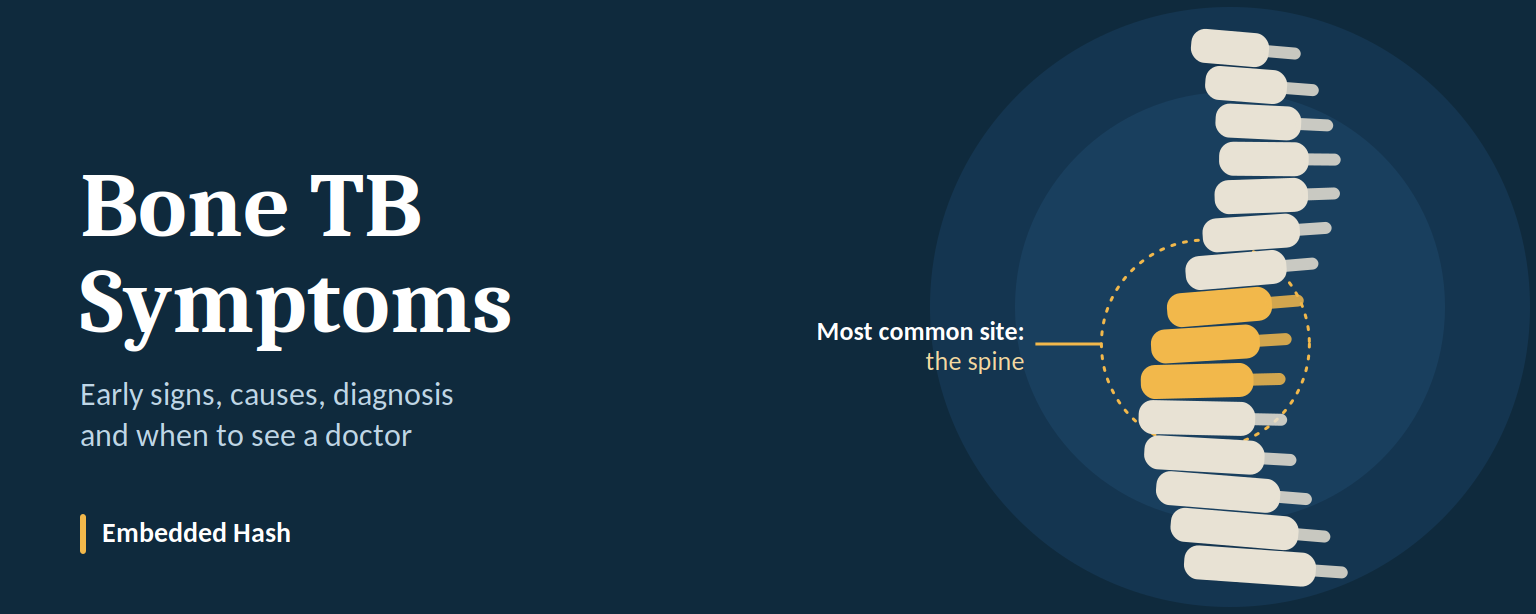
The cause is Mycobacterium tuberculosis, the same bacterium that causes lung TB. It usually reaches the bone through the bloodstream from an infection elsewhere in the body, sometimes years earlier. The spine is the most commonly affected site, followed by the hip and knee. Shoulders, ankles, wrists, ribs, and small bones of the hands and feet can also be involved.
Bone TB differs from pulmonary TB in where the disease sits. Lung TB causes cough and breathing symptoms and spreads through the air. Bone TB mainly causes pain, swelling, and loss of movement, and is generally not contagious by itself. Some people have both forms at once.
Early diagnosis matters because untreated infection can damage bone and joints, deform the spine, and press on nerves. Awareness is especially important in India, which carries a large share of the world’s TB burden. See a doctor if bone or joint pain lasts more than a few weeks, keeps worsening, or comes with fever, night sweats, or weight loss. This article is educational and cannot diagnose you.
What is Bone TB?
Bone TB is a bacterial infection of the bones or joints caused by Mycobacterium tuberculosis.
Doctors group it under extrapulmonary TB, meaning TB outside the lungs. Bone TB mainly affects:
- The spine (spinal TB or TB of the spine): the most common site
- Large joints: hip and knee
- Other joints and bones: ankle, shoulder, elbow, wrist, ribs, and small bones
As the infection grows, it can destroy bone and joint surfaces. A collection of pus, called a “cold abscess,” may form because it lacks the heat and redness of a typical abscess.
What Causes Bone TB?
Bone TB is caused by TB bacteria that travel through the blood or lymph from another infected site, often the lungs, and settle in bone.
Key points:
- Many people breathe in TB bacteria, and the body walls them off. This is latent TB.
- Bacteria can silently reach bone and stay dormant for years.
- If immunity falls, they can become active and start destroying tissue.
- Less commonly, infection spreads directly from a nearby site.
Bone TB is not caused by injury, though a past injury may draw attention to an existing infection. Bone TB causes can also include poor nutrition and weakened immunity, covered under risk factors below.
Bone TB Symptoms
The most common Bone TB symptoms are persistent bone or joint pain, swelling, stiffness, and general signs such as low-grade fever, night sweats, and weight loss.
Symptoms build slowly, often over weeks to months. Common signs include:
- Pain that steadily worsens and may be present at rest or at night
- Swelling or warmth over a bone or joint
- Stiffness and reduced movement
- Limping or difficulty bearing weight
- Muscle wasting around the affected area
- Low-grade fever, usually in the evening
- Night sweats
- Unexplained weight loss and loss of appetite
- Fatigue
- A swelling or abscess that may later drain through the skin (a sinus)
Not everyone has every symptom. Many people have no fever at all. These symptoms are not diagnostic, since many other conditions look similar.
Early Symptoms of Bone TB
The first symptom of bone TB is usually dull, persistent pain in one bone or joint that doesn’t improve with rest or simple painkillers.
Early signs can be easy to overlook:
- Mild, aching pain that slowly increases
- Pain that is worse at night
- Slight stiffness, especially in the morning
- A subtle limp or guarding of a limb
- Tiredness and reduced appetite
Because early symptoms are mild, many people wait weeks or months before seeing a doctor. Seeking evaluation for pain that lasts beyond a few weeks can prevent damage.
Advanced Bone TB Symptoms
Advanced bone TB can cause visible deformity, abscesses, severe pain, and loss of function.
Later signs may include:
- Marked swelling and a cold abscess
- A draining sinus (an opening in the skin)
- Joint deformity or a shortened limb
- Severe restriction of movement
- Spinal curvature (kyphosis, sometimes called a hump or gibbus)
- Weakness, numbness, or tingling in the arms or legs
- Difficulty controlling bladder or bowel in spinal cases
New weakness or bladder or bowel changes need urgent medical attention.
Bone TB Symptoms in Different Parts of the Body
The symptoms depend on which bone or joint is infected.
- Spine: Back or neck pain, tenderness, stiffness, muscle spasm, and sometimes a hump. Nerve compression can cause weakness or numbness.
- Hip: Pain in the groin, thigh, or knee, a limp, and difficulty walking or sitting cross-legged. Children may refuse to bear weight.
- Knee: Swelling, pain, stiffness, a limp, and wasting of thigh muscles. The joint may feel warm.
- Ankle: Pain and swelling around the ankle and difficulty walking, sometimes with a draining sinus.
- Shoulder: Deep pain, stiffness, and limited arm movement. Muscle wasting may follow.
- Other bones and joints: Elbow, wrist, ribs, skull, and small bones can show localized swelling and pain. In children, finger or toe bones may swell (dactylitis).
Spinal TB Symptoms
Spinal TB symptoms usually begin with persistent back pain and may progress to deformity or nerve problems.
Spinal TB, or Pott’s disease, can cause:
- Back or neck pain that worsens over time and at night
- Local tenderness and stiffness
- Muscle spasm and difficulty bending
- Spinal curvature or a visible hump
- A cold abscess near the spine
- Leg or arm weakness, numbness, or tingling
- Problems with balance or walking
- Difficulty controlling urine or stool in advanced cases
Weakness or bladder or bowel changes are an emergency. Seek care immediately.
Bone TB Symptoms in Children
Children with bone TB often present with limping, refusal to walk, irritability, or a spinal deformity.
Young children cannot describe pain, so watch for:
- A new limp or refusing to bear weight
- Night crying or restless sleep
- Reduced play and activity
- Swelling of a joint or finger
- Back stiffness or a visible hump
- Poor weight gain, low-grade fever, and tiredness
Children can progress faster than adults and may develop deformity during growth, so early evaluation is important.
Bone TB Symptoms in Adults
In adults, Bone TB symptoms are often subtle and commonly mistaken for arthritis or a muscle strain.
Adults may have:
- Persistent back, hip, or knee pain lasting weeks to months
- Stiffness and reduced mobility
- Mild or no fever
- Weight loss and fatigue
- Worsening symptoms in people with diabetes or low immunity
Because adults often attribute pain to age or work, diagnosis can be delayed.
How Does Bone TB Spread?
Bone TB develops when TB bacteria spread inside the body, usually through the bloodstream, to bone.
Person-to-person spread happens mainly through lung TB. When someone with active lung TB coughs, others can breathe in the bacteria. A small number of those infected later develop disease, which may involve the lungs, bone, or elsewhere.
In other words, a person gets TB from the air, and bone TB may develop afterward as the infection spreads internally.
Is Bone TB Contagious?
Bone TB by itself is generally not considered contagious, because the bacteria are inside bone and not in the air you breathe out.
The exception is when a person also has active lung or throat TB. That form can spread. For this reason, doctors usually check the chest as well. Open draining wounds need careful dressing and hygiene. Your doctor will advise on any precautions for your situation.
Risk Factors for Bone TB
Bone TB is more likely in people with TB exposure, weakened immunity, or conditions that lower resistance.
- Previous or current TB infection
- Close contact with a person who has active TB
- A weakened immune system, including HIV or long-term steroid use
- Malnutrition and low body weight
- Diabetes
- Living or working where TB is common, or in crowded settings
- Chronic kidney disease, cancer treatment, or other medicines that suppress immunity
- Smoking and heavy alcohol use
Having a risk factor does not mean a person will develop bone TB.
How is Bone TB Diagnosed?
Bone TB is diagnosed by combining history, examination, imaging, and laboratory tests. No single test always confirms it.
Common steps include:
- Medical history: symptoms, TB exposure, past TB, and risk factors
- Physical examination: swelling, tenderness, movement, deformity, and nerve function
- X-ray: shows bone or joint changes, though early disease may look normal
- MRI: helpful for early spinal TB, abscesses, and nerve involvement
- CT scan: gives detailed views of bone destruction
- Blood tests: ESR and CRP are raised in many infections and are not specific to TB
- TB-related tests: Mantoux (tuberculin skin test), IGRA, and chest X-ray support the picture but cannot alone confirm bone TB
- Biopsy or tissue testing: a sample from bone or an abscess may be tested by smear, culture, molecular tests such as CBNAAT/Xpert, and histopathology
Drug sensitivity testing helps choose the right medicines. Many conditions mimic bone TB, so diagnosis rests on a specialist’s judgment.
Bone TB Treatment
Bone TB is treated mainly with anti-tuberculosis medicines taken for months under medical supervision. Treatment must be guided by a qualified healthcare professional.
Main elements:
- Anti-TB medicines: a combination of drugs, typically including isoniazid, rifampicin, pyrazinamide, and ethambutol at first
- Completing the full course: stopping early can allow bacteria to return or become drug-resistant
- Monitoring: regular checkups, blood tests such as liver function, and imaging to track response
- Pain management: medicines and positioning as advised
- Physiotherapy: gentle exercises to maintain movement and strength when appropriate
- Bracing or rest: in some spinal cases
- Surgery in selected cases: for spinal instability, nerve compression, a large abscess, severe deformity, or when diagnosis or response is unclear
In India, TB diagnosis and treatment are available free of charge under the National TB Elimination Programme (NTEP), and you can ask any government health facility or your doctor about it.
How Long Does Bone TB Take to Heal?
Treatment commonly lasts from about 6 to 12 months or longer, and recovery varies from person to person.
Healing time depends on:
- Location of infection: spinal and complex joint disease may need longer
- Severity: more bone damage or abscesses can slow recovery
- Treatment response: monitored by symptoms, blood tests, and imaging
- Overall health: diabetes, malnutrition, or low immunity can affect recovery
- Complications: drug resistance, deformity, or nerve involvement may extend treatment
Symptoms may improve within weeks, but the course must still be completed. Your doctor decides the duration and when treatment can stop.
Complications of Bone TB
Untreated or late-treated bone TB can cause lasting bone and joint damage. Possible complications include:
- Bone destruction: loss of bone structure
- Joint damage: stiffness or early arthritis
- Spinal deformity: kyphosis or collapse of vertebrae
- Nerve compression: weakness, numbness, or paralysis in spinal cases
- Reduced mobility: difficulty walking or using a limb
- Chronic pain: from joint or nerve damage
- Disability: in severe or untreated cases
Timely treatment lowers the risk of these outcomes, though no outcome can be guaranteed.
When Should You See a Doctor for Bone TB Symptoms?
See a doctor if bone or joint pain lasts more than two to three weeks, keeps worsening, or comes with fever, night sweats, or weight loss.
Seek evaluation for:
- Persistent pain, swelling, or stiffness in a bone or joint
- A limp or refusal to walk, especially in a child
- Back pain that is worse at night or doesn’t improve with rest
- A swelling that grows or discharges
- Known TB contact, past TB, diabetes, or low immunity with new bone pain
Seek urgent care for:
- New leg or arm weakness or numbness
- Loss of bladder or bowel control
- Inability to walk or bear weight
- Severe pain with high fever
You can call the national TB helpline, Ni-kshay Sampark (1800-11-6666), for guidance.
Bone TB Prevention
There is no way to prevent bone TB completely, but treating TB early and supporting health lowers the risk.
Practical measures:
- Get symptoms of lung TB, such as a cough lasting over two weeks, checked and treated promptly
- Complete any TB treatment fully
- Screen close contacts of people with active TB
- Ask your doctor about TB preventive treatment if you are a close contact or have a weak immune system
- Ensure infants receive BCG vaccination as per the national schedule. It mainly protects young children from severe forms of TB.
- Eat a balanced diet and keep diabetes well controlled
- Avoid smoking and limit alcohol
- Seek early evaluation for persistent bone or joint symptoms
Bone TB vs Other Bone and Joint Conditions
Many bone and joint conditions share symptoms, so only medical evaluation can tell them apart.
Condition | Common Symptoms | Key Difference |
Bone TB | Slowly worsening bone or joint pain, swelling, stiffness, night sweats, weight loss, possible cold abscess | Gradual onset with systemic symptoms; confirmed with imaging and TB-related tests |
Arthritis | Joint pain, morning stiffness, swelling, reduced movement | Often affects several joints; rheumatoid arthritis shows inflammatory markers and antibodies |
Osteomyelitis (bacterial bone infection) | Bone pain, fever, redness, warmth, swelling | Often faster onset; caused by other bacteria; confirmed by culture |
Bone tumor | Persistent bone pain, swelling, sometimes a lump | Imaging and biopsy show tumor tissue |
Sports injury | Pain after a specific injury, bruising, swelling | Clear injury history; improves with rest and treatment |
Bone TB Symptoms vs Pulmonary TB Symptoms
Feature | Bone TB | Pulmonary TB |
Main affected area | Bones and joints, most often the spine, hip, and knee | Lungs |
Common symptoms | Persistent bone or joint pain, swelling, stiffness, low-grade fever, weight loss | Cough, fever, night sweats, weight loss, chest pain |
Cough | Not typical unless the lungs are also involved | Common; may last over two weeks, sometimes with blood |
Joint/bone pain | Main symptom | Not a main feature |
Diagnosis | Imaging (X-ray, MRI, CT), tissue tests, supporting blood tests | Sputum tests, chest X-ray, molecular tests |
Statistics and Medical Insights
- India’s share (WHO Global TB Report 2025, data for 2024): India accounted for 25% of the global TB total, the highest of any country, and the report put India’s rate at 187 cases per lakh population. scroll
- Global burden (2024): Globally, 10.7 million people fell ill with TB and 1.23 million died, and India recorded an estimated 27.1 lakh new cases. medicaldialogues
- Trend in India (2015 to 2024): India’s TB incidence fell by 21%, from 237 to 187 cases per lakh population, almost twice the global decline of 12%. thewire
- Case detection (2024): About 26.18 lakh patients were diagnosed in 2024 out of an estimated incidence of roughly 27 lakh, according to the health ministry. scroll
- Drug resistance (2024): India accounted for 32% of the global estimated cases of multidrug- or rifampicin-resistant TB. thewire
- Skeletal TB (general medical estimate): Review literature generally suggests that only a small share of all TB cases, roughly 1 to 3%, involve bones and joints, and that about half of those affect the spine. Exact figures vary by country, year, and study population.
Key Takeaways
- What it is: Bone TB is tuberculosis infection of the bones or joints, most often the spine, hip, or knee.
- Common symptoms: Persistent bone or joint pain, swelling, stiffness, limping, night sweats, low-grade fever, and weight loss. Spinal TB may also cause deformity or leg weakness.
- Diagnosis: Doctors combine examination, imaging (X-ray, MRI, CT), blood and TB-related tests, and sometimes a biopsy. No single test always confirms it.
- Treatment: Anti-TB medicines for several months, with monitoring, and sometimes physiotherapy or surgery in selected cases. Finish the full course.
- Act early: Pain lasting beyond a few weeks, or any new weakness, needs prompt medical evaluation to reduce the risk of lasting damage.
FAQ Section
- What are the symptoms of bone TB?
Common symptoms include persistent bone or joint pain, swelling, stiffness, limping, low-grade fever, night sweats, and weight loss. Symptoms depend on the affected bone and develop gradually. - What is the first symptom of bone TB?
Usually a dull, persistent pain in one bone or joint that slowly worsens and may be worse at night. Mild stiffness or a limp can accompany it. - Is bone TB curable?
Bone TB is treatable, and many people recover with a full course of anti-TB medicines, sometimes with surgery. Outcomes depend on how early treatment starts and on individual factors, so no result is guaranteed. - What causes bone TB?
It is caused by Mycobacterium tuberculosis, which usually spreads through the blood from another site, often the lungs, to settle in bone. Weak immunity can allow dormant bacteria to become active. - Is bone TB contagious?
Bone TB alone is generally not contagious. However, a person may also have active lung TB, which can spread through the air, so doctors usually check the chest. - How is bone TB diagnosed?
Through history, examination, imaging such as X-ray, MRI, or CT, blood and TB-related tests, and often a biopsy or tissue test. No single test is always conclusive. - How long does bone TB treatment take?
Treatment commonly lasts about 6 to 12 months or longer, depending on the site, severity, and response. Your doctor decides the duration. - What are the symptoms of spinal TB?
Back or neck pain that worsens, stiffness, tenderness, muscle spasm, and sometimes a spinal hump. Weakness, numbness, or bladder or bowel changes need urgent care. - Can bone TB affect the joints?
Yes. Bone TB can infect joints, most often the hip and knee, causing pain, swelling, stiffness, and reduced movement. Without treatment, joint surfaces can be damaged. - How do I know if my symptoms could be bone TB?
You can’t tell from symptoms alone. If bone or joint pain lasts more than a few weeks or comes with fever, night sweats, or weight loss, see a doctor for examination and tests.
Conclusion
Bone TB symptoms often begin as persistent, worsening pain, swelling, and stiffness in a bone or joint, sometimes with fever, night sweats, and weight loss. The spine, hip, and knee are most commonly affected, and signs can differ in children and adults. Because many conditions look similar, symptoms alone can’t diagnose bone TB.
Early diagnosis lets treatment begin before bone destruction, deformity, or nerve damage develops. Treatment with anti-TB medicines, completed fully and monitored by a qualified doctor, is the foundation of care, with surgery and physiotherapy in selected cases. Any bone or joint symptom that persists, worsens, or comes with weakness deserves medical evaluation.
This article is for general awareness only and is not a substitute for professional medical advice. Please consult a specialist at KK Swara Super Speciality Hospital for diagnosis and treatment.