Causes of Irregular Periods in 30s: What’s Normal, What’s Not, and When to Get Help
Irregular periods are menstrual cycles that vary widely in length, arrive earlier or later than expected, or skip months. If this sounds familiar, you’re not alone. The causes of irregular periods in 30s are often common and treatable once they are identified.
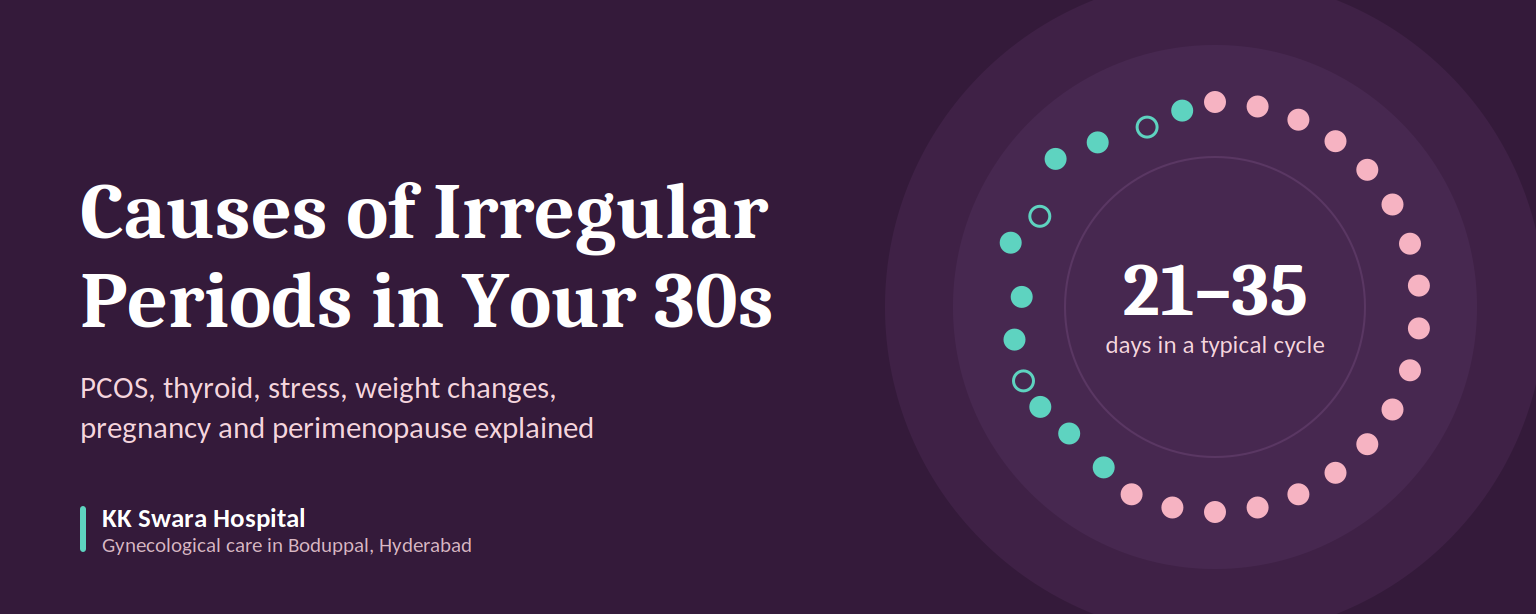
A cycle is counted from the first day of one period to the first day of the next. In adults it usually lasts 21 to 35 days, with bleeding for about two to seven days, according to ACOG. Cycles needn’t match exactly each month, but big swings are worth noticing.
In your 30s, hormone levels shift, work and family life add stress, and pregnancy or breastfeeding may enter the picture. Conditions such as PCOS or thyroid problems can also appear for the first time. Sometimes the cause is an early sign of perimenopause. Not every irregular period points to a disease.
Understanding the cause matters because irregular periods are a symptom, not a diagnosis. They can affect energy, mood, and fertility planning. This guide explains common causes, tests, and treatments in plain language. It is educational and not personal medical advice.
What Are Irregular Periods?
Irregular periods are cycles shorter than 21 days, longer than 35 days, very different in length from month to month, or missed altogether.
Gynecologic groups such as FIGO treat a month-to-month difference of more than about 7 to 9 days as irregular. Irregularity can also mean unusually heavy or light bleeding, or spotting between periods.
Some variation is normal, especially after pregnancy, during stressful months, or when coming off hormonal birth control. Pattern matters more than a single odd month.
Causes of Irregular Periods in 30s
The most common causes of irregular periods in your 30s are hormonal changes, PCOS, thyroid problems, stress, weight changes, pregnancy and breastfeeding, birth control, and perimenopause.
Most causes work by disturbing ovulation (the monthly release of an egg) or the uterine lining. Other causes include:
- Uterine fibroids or polyps
- Endometriosis
- Elevated prolactin
- Insulin resistance
- Ovarian problems
- Excessive exercise and poor sleep
The sections below explain each one. Causes vary from person to person, and some women have more than one.
Hormonal Changes and Irregular Periods
Hormonal imbalance means estrogen, progesterone, or other hormones aren’t rising and falling in their usual pattern, which can delay or skip ovulation.
In your 30s, ovarian hormone output can fluctuate. Thyroid, pituitary, and adrenal hormones also influence your cycle. When ovulation doesn’t happen, the uterine lining can build up unevenly, causing late, heavy, or unpredictable bleeding.
A short-lived imbalance, such as after illness or travel, often settles on its own. Persistent changes deserve evaluation.
PCOS and Irregular Periods in Your 30s
Yes, PCOS (polycystic ovary syndrome) is one of the most common causes of irregular periods, including in your 30s.
PCOS involves irregular ovulation, higher androgen (“male”) hormone levels, and sometimes ovarian cysts on ultrasound. Signs can include acne, excess facial or body hair, scalp hair thinning, and weight gain. Insulin resistance is common in PCOS.
Not everyone has every sign, and PCOS can be diagnosed later in life. Diagnosis needs a doctor’s evaluation, since other conditions can look similar. Learn more about PCOS treatment at our hospital.
Stress and Lifestyle Factors
Yes, chronic stress can make periods irregular by affecting the brain signals that control ovulation.
Other lifestyle factors can do the same:
- Poor sleep or shift work
- Excessive exercise
- Very restrictive dieting
- Frequent travel or time-zone changes
Busy 30s often include several of these at once. If your cycle changes during a demanding period and returns to normal afterward, lifestyle may be the main factor. If it doesn’t, get checked.
Pregnancy and Postpartum Changes
A missed period in your 30s may be a sign of pregnancy, so a pregnancy test is a sensible first step.
After childbirth, periods may take weeks to months to return and can be irregular at first. Breastfeeding often delays periods because the hormone prolactin suppresses ovulation. Even so, ovulation can return before the first period, so breastfeeding isn’t reliable contraception.
Miscarriage and ectopic pregnancy can also cause irregular bleeding. Seek urgent care for severe one-sided pain or heavy bleeding with a positive test.
Thyroid Problems and Menstrual Irregularities
Yes, an underactive or overactive thyroid can cause irregular, heavy, light, or missed periods.
The thyroid gland helps regulate metabolism and interacts with reproductive hormones. Hypothyroidism may be linked with heavier or less frequent periods, while hyperthyroidism may cause lighter or less frequent ones. Other signs include fatigue, weight change, hair changes, and feeling unusually cold or hot.
A simple blood test (TSH) can help check thyroid function, and thyroid conditions are usually manageable with treatment.
Weight Changes and Irregular Periods
Both weight gain and weight loss can affect the menstrual cycle.
Significant weight loss, low body fat, or heavy training may reduce hormone signals from the brain, sometimes stopping periods (hypothalamic amenorrhea). Weight gain can raise insulin and estrogen levels, which may disrupt ovulation and is linked with PCOS.
Gradual, balanced changes are usually gentler on your cycle. If your weight has changed without a clear reason, mention it to your doctor.
Perimenopause and Period Changes in the 30s
Yes, irregular periods in your 30s can occasionally signal early perimenopause, though this is less common than other causes.
Perimenopause, the transition before menopause, typically begins in the 40s. For some women it starts earlier. Signs include cycle changes, hot flashes, sleep disturbance, and mood shifts.
Periods stopping before age 40 may reflect premature ovarian insufficiency, which is estimated to affect roughly 1 in 100 women. It needs medical evaluation, and support is available.
Birth Control and Irregular Periods
Hormonal birth control commonly changes bleeding patterns, including spotting, lighter periods, or no periods.
Pills, hormonal IUDs, implants, and injections can all do this, particularly in the first few months. After stopping, cycles may take a few months to settle, since the body needs time to resume its natural rhythm.
Emergency contraception can also temporarily shift your next period. If bleeding is heavy, painful, or persistent on birth control, speak with your doctor.
Other Medical Conditions That Can Affect Periods
Several conditions beyond PCOS and thyroid disease can affect menstrual cycles.
- Uterine fibroids: non-cancerous growths that may cause heavy or prolonged bleeding
- Endometriosis: tissue similar to the uterine lining growing elsewhere, often causing painful or heavy periods
- Elevated prolactin: can cause missed periods and sometimes milky nipple discharge
- Insulin resistance and diabetes: may disrupt ovulation
- Ovarian problems: cysts or reduced ovarian function
- Uterine polyps and bleeding disorders: may cause irregular or heavy bleeding
- Certain medicines: including some antidepressants and antipsychotics
None of these are certain from symptoms alone. A doctor needs to confirm them.
Symptoms to Watch Along With Irregular Periods
Symptoms alongside irregular periods can offer clues, but they don’t confirm any specific condition. Watch for:
- Acne, excess hair growth, or hair thinning
- Unexplained weight gain or loss
- Fatigue, cold or heat intolerance
- Pelvic pain or painful periods
- Very heavy bleeding or large clots
- Breast discharge
- Hot flashes or night sweats
- Trouble getting pregnant
Note them down and share them at your appointment.
When Should You See a Gynecologist?
See a gynecologist if your periods change suddenly, stop for three months or more, or come with heavy bleeding or significant pain. Consider an appointment if you notice:
- Periods suddenly becoming irregular
- Missing periods repeatedly
- Very heavy bleeding (soaking a pad or tampon every hour for several hours)
- Bleeding between periods
- Severe pelvic pain
- Unexplained weight changes
- Difficulty becoming pregnant
- Symptoms suggesting PCOS or thyroid problems
- A possible pregnancy
- Bleeding after a long gap without periods
Most of these have treatable causes. Seeking care early gives you answers and options. If you’re looking for a gynecologist in Boduppal, you can book a consultation.
How Doctors Diagnose the Cause of Irregular Periods
Doctors start with your history and a physical exam, then add tests based on what they find.
Expect questions about your cycle dates, bleeding pattern, pregnancies, medicines, stress, sleep, exercise, and family history. A pelvic or general exam may follow. Tracking your cycle for a few months beforehand makes this step much easier.
The cause often becomes clear from this conversation, and tests then confirm it or rule out other possibilities.
Tests for Irregular Periods
Common tests include a pregnancy test, blood tests, and a pelvic ultrasound.
- Pregnancy test: rules out pregnancy first
- Thyroid and prolactin tests: check hormone function
- Reproductive hormones: such as FSH, LH, and testosterone when appropriate
- Blood sugar and hemoglobin: check for insulin resistance or anemia from heavy bleeding
- Pelvic ultrasound: looks at the uterus and ovaries
- Hysteroscopy or endometrial biopsy: used in selected cases of persistent abnormal bleeding
Your doctor orders only the tests relevant to your situation.
Treatment Options for Irregular Periods
Treatment depends on the cause, so identifying the cause comes first. Options may include:
- Lifestyle support: nutrition, activity, sleep, and stress management
- Thyroid medication: when a thyroid disorder is confirmed
- Hormonal therapy: sometimes used to regulate cycles or reduce heavy bleeding
- PCOS management: may combine lifestyle changes with medicines for cycles, insulin resistance, or ovulation
- Prolactin-lowering treatment: when prolactin is raised
- Treatment for fibroids or endometriosis: medicines or procedures where needed
Some irregularity needs no treatment, only monitoring. Always follow your doctor’s advice rather than self-medicating.
Lifestyle Changes That May Support Menstrual Health
Healthy routines can support hormonal balance, though they can’t replace medical care when a condition is present.
- Eat regular, balanced meals with enough protein, fiber, and iron
- Aim for steady, moderate exercise rather than extremes
- Prioritize consistent sleep
- Build in stress relief, such as walking, breathing exercises, or time off
- Work toward a weight your doctor considers healthy for you
- Limit smoking and heavy alcohol
Changes take a few cycles to show, so give them time.
Can Irregular Periods Affect Fertility?
Irregular periods can make conception harder because ovulation may be less predictable, but many women with irregular cycles do conceive.
Fertility gradually declines from the 30s, so it helps to seek advice if you’ve been trying for six months at age 35 or older, or sooner if cycles are very irregular. The WHO estimates that about 1 in 6 people worldwide experience infertility at some point.
Causes such as PCOS, thyroid disease, and raised prolactin are often treatable. Learn about our fertility and pregnancy care.
How to Track Your Menstrual Cycle
Track the first day of each period, how long bleeding lasts, how heavy it is, and any symptoms.
- Use a calendar or a period-tracking app
- Count from day one of one period to day one of the next
- Note spotting, pain, mood, and sleep changes
- Record medicines and major life events
- Bring three months of data to your appointment
Even a simple notebook works. This record often speeds up diagnosis.
Why Early Diagnosis Matters
Finding the cause early can protect your health, ease symptoms, and support your fertility plans.
Some conditions, such as PCOS, thyroid disease, and insulin resistance, can affect long-term health when left unmanaged. Long gaps between periods can leave the uterine lining overexposed to estrogen, which doctors may want to monitor. Heavy bleeding can cause anemia.
Early evaluation also relieves uncertainty. In many cases the answer is reassuring and simple.
Statistics and Medical Information
- Normal cycle length (established information): ACOG describes a typical adult cycle as 21 to 35 days, with bleeding lasting about two to seven days.
- PCOS (research finding): The WHO estimates PCOS affects roughly 8 to 13% of women of reproductive age worldwide, with up to 70% of affected women undiagnosed. Indian studies report a wide range depending on the population and diagnostic criteria.
- Endometriosis (research finding): The WHO estimates about 10% of women and girls of reproductive age are affected globally.
- Thyroid disease in India (research finding): Indian epidemiological studies suggest that hypothyroidism affects roughly one in ten adults, and is more common in women.
- Infertility (research finding): The WHO estimates that about 1 in 6 people worldwide experience infertility in their lifetime.
- Individual variation: Cycle patterns differ widely, and these figures describe populations rather than any one person.
Verify each figure against its source before publishing.
Why Choose KK Swara Hospital for Gynecological Care?
Women in Boduppal, Uppal, and across Hyderabad often want a gynecology hospital in Boduppal that treats menstrual concerns seriously and explains things clearly. At KK Swara Hospital, the gynecology team can help with:
- Patient-focused consultations: time to discuss your cycle, symptoms, and goals
- Evaluation of menstrual and hormonal concerns: including PCOS, thyroid, and hormonal health
- Diagnostic support: examination, blood tests, and ultrasound
- Personalized treatment plans: based on your diagnosis and life stage
- Women’s health services: across menstrual health, pregnancy care, and fertility concerns
- Convenient women’s healthcare in Hyderabad: care close to home in Boduppal
Every woman’s situation is different, and no clinic can promise a particular result. (Verify each service against the hospital’s official information and add confirmed doctor names and facilities before publishing.) Learn more on our gynecology page or meet our doctors.
Comparison Tables
Possible Causes: Signs, Effects, and When to Seek Advice
Possible Cause | Common Signs | How It May Affect Periods | When to Seek Medical Advice |
PCOS | Acne, excess hair, weight gain, thinning scalp hair | Infrequent or missed periods | Cycles longer than 35 days or trouble conceiving |
Thyroid disorder | Fatigue, weight change, temperature sensitivity | Heavier, lighter, or irregular periods | Cycle change with these symptoms |
Stress or lifestyle | Poor sleep, tension, restrictive diet | Delayed or missed periods | Missed periods for 3 months or more |
Pregnancy / postpartum | Missed period, nausea, breast tenderness | Missed or delayed periods | Positive test with pain or heavy bleeding |
Perimenopause | Hot flashes, night sweats, sleep changes | Shorter, longer, or skipped cycles | Symptoms in your 30s or early 40s |
Uterine fibroids | Pelvic pressure, heavy bleeding | Heavy or prolonged periods | Bleeding that soaks pads hourly or causes dizziness |
Endometriosis | Painful periods, pelvic pain | Painful or heavy periods | Pain that disrupts daily life |
Elevated prolactin | Milky nipple discharge, headaches | Missed periods | Missed periods with discharge |
Causes and Their Effect on Menstrual Cycles
Cause | How It Can Affect Menstrual Cycles |
Hormonal imbalance | Disrupts ovulation and the uterine lining |
PCOS | Causes infrequent or absent ovulation |
Thyroid disorders | Alter hormone balance, leading to heavy, light, or missed periods |
Stress | Interferes with brain signals that trigger ovulation |
Weight gain or loss | Changes estrogen and insulin levels, or lowers hormone signals |
Excessive exercise | May suppress ovulation |
Poor sleep | Can disturb hormone rhythms |
Pregnancy / breastfeeding | Pauses or delays periods |
Birth control | Changes bleeding patterns, spotting, or stops periods |
Perimenopause | Makes cycle length unpredictable |
Fibroids / polyps | Often cause heavy or prolonged bleeding |
Endometriosis | Can cause painful or heavy periods |
Elevated prolactin | May stop ovulation |
Insulin resistance | May disrupt ovulation |
Ovarian problems | May reduce or alter hormone production |
FAQ Section
- What are the common causes of irregular periods in your 30s?
Common causes include hormonal changes, PCOS, thyroid problems, stress, weight changes, pregnancy or breastfeeding, birth control, fibroids, and sometimes perimenopause. A gynecologist can identify which applies to you. - Is it normal to have irregular periods in your 30s?
Occasional variation is common, especially during stressful periods or after pregnancy. Frequent irregularity, missed periods, or heavy bleeding isn’t something to ignore and is worth evaluating. - Can PCOS cause irregular periods in your 30s?
Yes. PCOS is a leading cause of irregular or missed periods, and it can be diagnosed in your 30s. Only a doctor can confirm it through examination and tests. - Can stress make your periods irregular?
Yes. Ongoing stress can affect the hormones that control ovulation, leading to late or missed periods. If irregularity continues after stress eases, see your doctor. - Can thyroid problems cause irregular periods?
Yes. Both underactive and overactive thyroid can alter menstrual cycles. A simple blood test helps check thyroid function. - Can irregular periods affect fertility?
They can, because ovulation may be less predictable. Many women with irregular periods still conceive, and underlying causes are often treatable. - When should I see a gynecologist for irregular periods?
Consult one if your periods suddenly change, stop for three months or more, are very heavy, or come with severe pain, bleeding between periods, or trouble conceiving. - Can weight gain or weight loss affect my menstrual cycle?
Yes. Significant weight loss, low body fat, or weight gain can disrupt ovulation and cycle regularity. - Can irregular periods in your 30s be a sign of perimenopause?
Occasionally. Perimenopause usually starts in the 40s but can begin earlier. Other causes are more common, so evaluation is helpful. - How are irregular periods diagnosed and treated?
Diagnosis involves history, examination, and tests such as a pregnancy test, blood tests, and ultrasound. Treatment depends on the cause and may include lifestyle changes, medicines, or procedures.
Key Takeaways
- Normal range: Cycles of 21 to 35 days are typical, and occasional variation is common.
- Common causes: PCOS, thyroid problems, stress, weight changes, pregnancy, birth control, and perimenopause can all contribute.
- Not always a disease: Many causes are temporary or manageable, but causes vary from person to person.
- See a doctor: Repeated missed periods, very heavy bleeding, severe pain, or fertility concerns warrant evaluation.
- Early care helps: Tracking your cycle and consulting a gynecologist leads to clearer answers and tailored treatment.
Medical Disclaimer
This article is for general educational purposes and is not a substitute for professional medical advice, diagnosis, or treatment. It does not diagnose any condition. Symptoms and causes vary from person to person. Always consult a qualified gynecologist about your own menstrual health.
Conclusion
The causes of irregular periods in 30s range from everyday factors such as stress, sleep, and weight changes to conditions such as PCOS, thyroid disorders, fibroids, and, occasionally, early perimenopause. Because the reasons vary, understanding your own cause is what leads to the right care.
Tracking your cycle, noticing accompanying symptoms, and knowing when to seek help puts you in control. Treatment depends on the diagnosis, and for many women, simple measures bring cycles back to a steadier pattern.
If your periods have become persistently irregular, very heavy, or painful, or you’re finding it hard to conceive, consider speaking with a qualified gynecologist at KK Swara Hospital for appropriate evaluation and guidance.
This article is for general awareness only and is not a substitute for professional medical advice. Please consult a specialist at KK Swara Super Speciality Hospital for diagnosis and treatment.