Typhoid Vaccine Price: What Determines the Cost and What You Should Know
AI Overview Summary: Typhoid Vaccine Price depends on the vaccine type (TCV, Vi polysaccharide, or oral), brand, number of doses, age of the patient, consultation fees, and the healthcare provider or city. There is no single fixed price nationwide, so it’s best to confirm current pricing directly with a hospital or vaccination centre such as KK Swara Hospital Boduppal before your visit.
Introduction
Typhoid fever is a bacterial infection caused by Salmonella typhi, typically spread through contaminated food or water. It remains a public health concern in many parts of India, particularly in areas with limited access to clean drinking water and sanitation. The typhoid vaccine is a preventive tool designed to lower the risk of contracting this infection, and it’s recommended for specific age groups, travellers, and people in higher-exposure settings.
Given how common typhoid still is, many people search for “Typhoid Vaccine Price” before deciding to get vaccinated — whether for themselves, their children, or ahead of international travel. It’s a reasonable question, but it doesn’t have a single universal answer. The actual cost of vaccination depends on several moving parts: which vaccine is used, its brand, how many doses are required, the healthcare provider’s charges, consultation fees, and even the city where you get vaccinated.
This is why it’s important to understand these variables rather than rely on a fixed number found online. Typhoid vaccination may benefit children, adults living in endemic regions, travellers heading to high-risk destinations, and individuals with occupational exposure — but suitability should always be confirmed with a qualified healthcare professional. Choosing a reliable hospital or vaccination centre also matters, since proper storage, correct dosing, and professional guidance directly affect how safe and effective the vaccination process is.
In this article, we’ll break down what influences Typhoid Vaccine Price, the different vaccine types available, who should consider vaccination, safety information, and how to confirm accurate pricing before your visit — including at KK Swara Hospital Boduppal.
What Is a Typhoid Vaccine?
A typhoid vaccine is a preventive immunization that helps the body build defenses against Salmonella typhi, the bacterium responsible for typhoid fever. Vaccination works by exposing the immune system to a harmless component of the bacteria (or a weakened form of it), prompting the body to produce antibodies that can respond quickly if exposed to the actual infection later.
There are two broad categories of typhoid vaccines used globally and in India:
- Injectable vaccines — including typhoid conjugate vaccines (TCV) and Vi capsular polysaccharide vaccines, given as an intramuscular or subcutaneous shot.
- Oral vaccines — a live attenuated vaccine (Ty21a) taken as capsules over several doses.
The right choice between injectable and oral options depends on age, medical history, and a healthcare provider’s recommendation. Typhoid conjugate vaccine is given as a suspension for injection, typically into the thigh muscle for younger children or the deltoid muscle for children two years and older. Oral vaccines, by contrast, are usually reserved for older children and adults who can safely follow a multi-dose capsule schedule.
Typhoid Vaccine Price in India
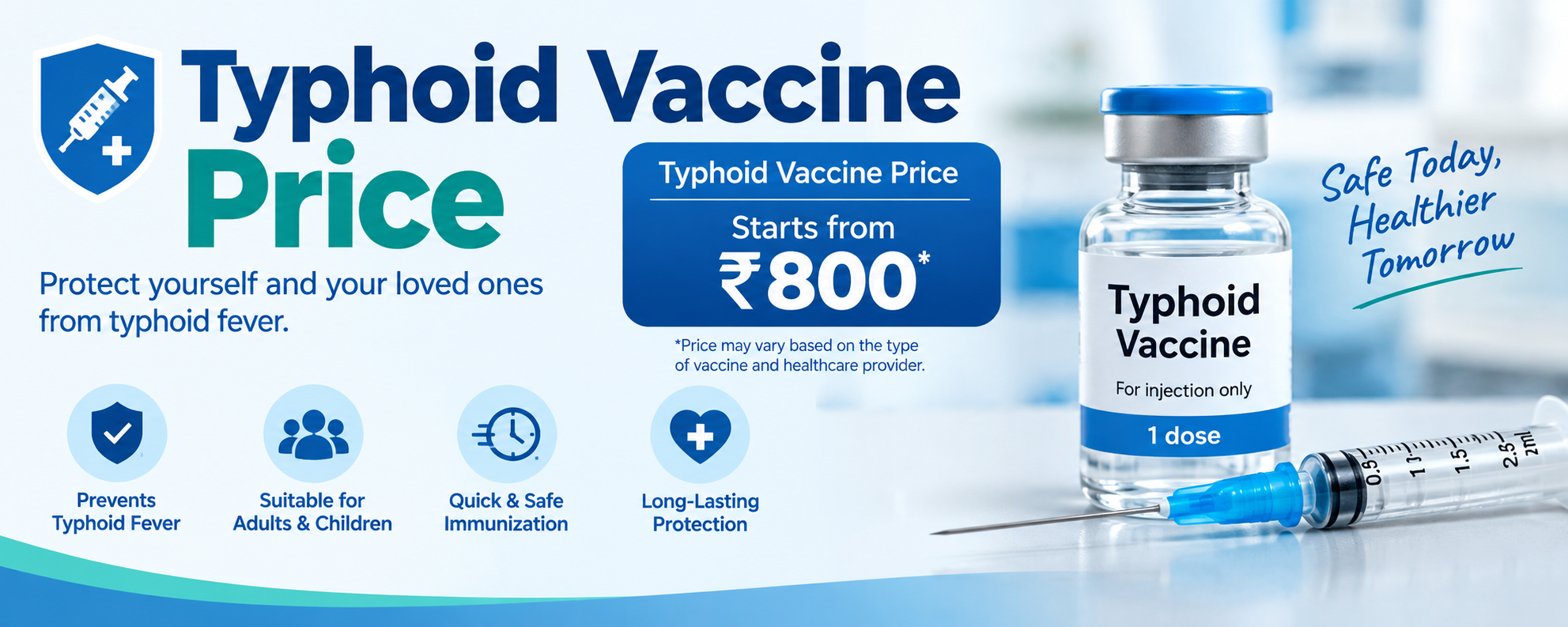
There is no single, fixed Typhoid Vaccine Price across India. The amount you pay can differ significantly based on several factors:
- Vaccine type — TCV, Vi polysaccharide, or oral Ty21a vaccines are priced differently.
- Vaccine brand — different manufacturers price their vaccines differently.
- Dosage — a single-dose injectable vaccine versus a multi-dose oral schedule affects overall cost.
- Age of the patient — pediatric and adult dosing/formulations may carry different charges.
- Healthcare provider — hospitals, clinics, and vaccination centres set their own service charges.
- Location — pricing can vary between cities and even between neighbourhoods within the same city.
- Consultation fees — a doctor’s consultation before vaccination may be charged separately.
- Administration charges — the cost of the injection procedure itself, distinct from the vaccine’s price.
- Availability — vaccine stock and brand availability can influence pricing at a given time.
- Additional medical services — pre-vaccination screening or other tests, if recommended.
Because these variables change based on your specific situation and provider, it’s best to treat any online price as a rough reference only. The most reliable way to get an accurate Typhoid Vaccine Price is to contact your chosen hospital or vaccination centre directly and confirm current rates before your visit.
Table: Factors Affecting Typhoid Vaccine Price
Factor | How It Can Affect Typhoid Vaccine Price |
Vaccine Type | TCV, Vi polysaccharide, and oral vaccines differ in manufacturing process and dosing, which affects their price. |
Vaccine Brand | Different manufacturers set different prices for functionally similar vaccines. |
Age Group | Pediatric formulations, dosing volumes, and age-specific schedules can influence cost. |
Number of Doses | A single-dose injectable is generally priced differently from a multi-dose oral regimen. |
Consultation | A doctor’s pre-vaccination consultation fee may be charged in addition to the vaccine cost. |
Administration Charges | The clinical procedure of administering the vaccine (injection or oral dosing) may carry a separate charge. |
Location | Prices can vary between cities, and even between areas within the same city, based on operating costs. |
Healthcare Provider | Hospitals, standalone clinics, and vaccination centres each set their own service and facility charges. |
Factors Affecting Typhoid Vaccine Price
Let’s look at these factors in a little more depth.
Vaccine type and manufacturer: TCVs are newer-generation vaccines and tend to be priced differently from older Vi polysaccharide vaccines. Brand-to-brand pricing can also vary even within the same vaccine category.
Number of doses: Injectable vaccines like TCV are usually single-dose, while the oral Ty21a vaccine requires multiple capsules taken over alternate days, which can change the total cost of the full course.
Hospital or clinic charges: Facility fees, staff time, and cold-chain storage requirements (vaccines must be refrigerated) are built into what a healthcare provider charges.
Doctor consultation: Some providers include a brief consultation as part of the vaccination visit; others bill it separately, especially if there’s a detailed health history review.
Vaccination administration charges: This covers the actual clinical time and materials for delivering the vaccine safely.
City and location: Operating costs differ between metro cities, tier-2 cities, and smaller towns, which is reflected in service pricing.
Age and vaccination history: A first-time vaccination and a booster dose may be priced differently, and pediatric visits sometimes include additional monitoring.
Special medical requirements: Individuals with underlying health conditions may need additional screening or medical clearance, which can add to the overall cost.
Types of Typhoid Vaccines
There are three commonly used typhoid vaccine categories worldwide, each with different administration methods and target age groups.
Typhoid conjugate vaccine is recommended as a single 0.5 ml dose for children and adults, given as an intramuscular injection, and may be used as routine vaccination in the second year of life or as catch-up vaccination up to 15 years of age. WHO recommends TCV for infants and children from six months of age and in adults up to 45 years in typhoid-endemic regions, while a single dose of Vi polysaccharide vaccine is recommended from two years of age, and a three-dose oral Ty21a schedule is used above six years, taken every second day.
Table: Comparing Typhoid Vaccine Types
Vaccine Type | General Description | Dosing Considerations | Key Considerations |
Typhoid Conjugate Vaccine (TCV) | A newer-generation injectable vaccine that links the bacterial polysaccharide to a carrier protein, which can improve immune response, including in younger children. | Usually given as a single 0.5 ml intramuscular dose; can be used from around six months of age depending on national guidelines. | Generally suitable for infants, children, and adults; booster requirements are still being studied by health authorities. |
Vi Polysaccharide Vaccine (ViPS) | An older-generation injectable vaccine based on the purified capsular polysaccharide of the bacteria. | Typically a single intramuscular or subcutaneous dose from two years of age; may require re-vaccination every few years per provider guidance. | Not usually recommended for children under two years; duration of protection may be shorter than TCV. |
Oral Typhoid Vaccine (Ty21a) | A live attenuated (weakened) vaccine taken as capsules rather than an injection. | Multi-dose oral schedule, generally taken on alternate days; typically used in older children and adults. | Requires completing the full capsule course as prescribed; not typically used in very young children or immunocompromised individuals. |
Duration of protection and booster needs vary by vaccine type and should be confirmed with your healthcare provider based on the latest clinical guidance.
Who Should Get a Typhoid Vaccine?
Vaccination recommendations depend on individual health status, age, location, and exposure risk. Groups that may be advised to consider typhoid vaccination include:
- Children in regions where typhoid is more common
- Travellers visiting typhoid-endemic countries or regions
- People living in areas with limited access to safe drinking water or sanitation
- Individuals with occupational exposure, such as food handlers or healthcare workers
- People with close contact to a confirmed typhoid case
Vaccination is also generally recommended for professional food handlers, travellers from non-endemic to endemic areas, healthcare workers, and people who are HIV-positive or otherwise immunocompromised. Final suitability should always be determined by a qualified healthcare professional based on current medical guidelines and your personal health history.
Typhoid Vaccine Schedule and Doses
The number of doses and timing depends on which vaccine type is used:
- TCV: Typically a single dose, sometimes followed by a booster in specific circumstances based on ongoing research into how long protection lasts.
- Vi polysaccharide vaccine: Usually a single dose, with re-vaccination considered every few years depending on continued risk.
- Oral vaccine (Ty21a): A short multi-dose course of capsules taken on alternate days, requiring the full course to be completed for the vaccine to work as intended.
Research is ongoing regarding long-term protection. A study published in The Lancet, based on a cluster randomized controlled trial in Dhaka, Bangladesh, found a decline in the protection provided by a single-dose TCV three to five years after vaccination, with the steepest decline seen among children vaccinated at younger ages. This is one reason booster recommendations continue to evolve, and why following your healthcare provider’s current advice — rather than general online information — is important.
Typhoid Vaccine for Children
Children, particularly in typhoid-endemic areas, are often considered a priority group for vaccination because they can be more vulnerable to complications from typhoid fever. Typhoid conjugate vaccine can be given from six months of age in relevant settings, using a single dose administered in the thigh for children under two years and in the upper arm for children two years and older.
Parents considering vaccination for their child should discuss the following with a pediatrician or family doctor:
- The child’s age and overall health
- Local or travel-related typhoid risk
- Which vaccine type is appropriate
- Any known allergies or contraindications
- Follow-up or booster requirements, if applicable
A pediatric consultation helps ensure the vaccine choice and timing are appropriate for the child’s specific situation.
Typhoid Vaccine for Adults
Adults may benefit from typhoid vaccination in several situations:
- Travelling to or living in typhoid-endemic regions
- Occupational exposure (for example, food service or sanitation work)
- Environmental exposure due to local water or sanitation conditions
- No prior vaccination history and ongoing risk factors
- Needing a booster after a previous vaccination, depending on the vaccine type and time elapsed
As with children, an adult’s vaccination plan should be personalized based on medical history, risk exposure, and a healthcare provider’s assessment — rather than a one-size-fits-all recommendation.
Typhoid Vaccine for Travellers
International travellers are one of the most commonly advised groups for typhoid vaccination, especially when visiting regions with a higher burden of typhoid fever, such as parts of South Asia, Africa, and Latin America.
Key considerations for travellers include:
- High-risk destinations: Countries with limited sanitation infrastructure or ongoing typhoid outbreaks.
- Food and water precautions: Vaccination is a helpful preventive layer but does not replace safe food and water practices while travelling.
- Timing before travel: Vaccines generally need time to build immunity, so it’s advisable to get vaccinated a few weeks before departure — check specific timing with your provider.
- Destination-specific recommendations: Travel health guidance can vary by country, so checking updated recommendations (for example, via a travel medicine clinic) is worthwhile.
Typhoid Vaccine Side Effects and Safety
Like most vaccines, typhoid vaccination can cause mild, short-term reactions in some people. Reported reactions may include mild pain or redness at the injection site, fever, headache, and muscle aches, with anaphylactic reactions being rare.
Commonly reported reactions include:
- Pain, redness, or soreness at the injection site
- Mild fever
- Fatigue or tiredness
- Headache
- Occasionally, mild gastrointestinal discomfort (more common with the oral vaccine)
When to seek medical attention: If you experience a high fever, difficulty breathing, swelling of the face or throat, a widespread rash, or any severe or unusual reaction after vaccination, seek medical care promptly. These severe reactions are uncommon, but it’s important to know the warning signs.
Vaccination is generally not contraindicated during pregnancy or breastfeeding for the injectable typhoid vaccines, though it’s advisable to postpone vaccination during a severe acute febrile illness. Always disclose your full medical history to your healthcare provider before vaccination.
Typhoid Vaccine Benefits
Typhoid vaccination offers several potential benefits as part of a broader preventive health strategy:
- Reducing the risk of contracting typhoid fever
- Supporting preventive healthcare, particularly in higher-risk settings
- Helping protect travellers heading to endemic regions
- Contributing to broader public health efforts to reduce typhoid transmission, including in the context of rising antimicrobial resistance
It’s worth emphasizing that vaccination is a preventive measure, not a replacement for safe food and water practices. Combining vaccination with good hygiene offers more comprehensive protection than either approach alone.
Typhoid Vaccine Price vs Cost of Typhoid Treatment
When weighing the value of vaccination, it can help to think about it alongside the potential costs associated with treating typhoid fever if it does occur. While exact treatment costs vary widely by case severity, hospital, and location, typhoid treatment can generally involve:
- Diagnostic testing to confirm the infection
- Doctor consultations, sometimes multiple visits
- A course of antibiotics (with growing concern over antimicrobial-resistant strains requiring more complex treatment)
- Possible hospitalization in moderate-to-severe cases, which adds room, monitoring, and nursing costs
In India, epidemiological modelling published in The Lancet Regional Health – Southeast Asia estimated approximately 4.9 million typhoid cases and 730,000 hospitalisations in 2023 alone, with fluoroquinolone-resistant strains responsible for a large share of these hospital admissions. This underscores why prevention, including vaccination where appropriate, is often discussed as a valuable part of a broader healthcare strategy — though this article does not make specific cost comparisons, since actual treatment costs vary case by case.
Where Can You Get a Typhoid Vaccine?
Typhoid vaccination is generally available at:
- Hospitals with vaccination or immunization departments
- Private clinics offering vaccination services
- Dedicated vaccination centres
- Pediatric healthcare centres, for children’s vaccinations
- Travel medicine clinics, particularly for travellers needing destination-specific guidance
KK Swara Hospital Boduppal is one such healthcare option in the Boduppal area of Hyderabad where patients can inquire about typhoid vaccination availability, current pricing, and guidance from qualified medical professionals. As with any provider, it’s a good idea to call ahead and confirm vaccine stock, pricing, and appointment availability before visiting.
How to Check Typhoid Vaccine Price Before Vaccination
Before your vaccination appointment, it helps to ask a few direct questions so there are no surprises:
- Ask which vaccine is being offered (TCV, Vi polysaccharide, or oral).
- Confirm the vaccine brand and type.
- Ask about the number of doses required for the full course.
- Check whether consultation charges apply separately.
- Ask whether administration charges are included in the quoted price.
- Confirm whether a booster dose is required, and if so, when.
- Verify vaccine availability before visiting, especially if a specific brand is preferred.
- Ask a qualified healthcare professional whether the vaccine is suitable for your age and health profile.
Typhoid Prevention Beyond Vaccination
Vaccination works best alongside everyday preventive habits, especially in areas where typhoid risk is higher:
- Drinking safe, purified, or boiled water
- Eating properly cooked, hot food and avoiding raw or undercooked items
- Washing hands regularly, especially before eating and after using the restroom
- Avoiding unsafe street food or beverages with ice from uncertain water sources
- Maintaining good overall hygiene practices
- Following destination-specific travel health recommendations when travelling
Typhoid Vaccine Price: What Patients Should Know
How much does a typhoid vaccine cost? There isn’t a single fixed Typhoid Vaccine Price that applies everywhere. The cost depends on the vaccine type (TCV, Vi polysaccharide, or oral), the brand used, the number of doses, your location, the healthcare provider’s charges, and whether consultation and administration fees are billed separately. Because pricing can change and varies by provider, it’s best to confirm the current rate directly with your chosen vaccination provider, such as KK Swara Hospital Boduppal, before your visit.
Why Choose KK Swara Hospital Boduppal
Choosing a reliable healthcare provider matters when it comes to vaccination — proper vaccine storage, correct dosing, and professional guidance all affect the safety and effectiveness of the process. KK Swara Hospital Boduppal is a healthcare facility located in the Boduppal area of Hyderabad where patients can consult with medical professionals regarding typhoid vaccination suitability, ask about available vaccine types, and confirm current pricing directly with the hospital’s team. As always, patients are encouraged to contact the hospital directly to verify specific services, current availability, and vaccination guidance rather than relying solely on online information.
Conclusion
Typhoid Vaccine Price is not a single, fixed number — it depends on the vaccine type, brand, number of doses, patient age, consultation fees, administration charges, and the healthcare provider or city you visit. Understanding these factors can help you ask the right questions and avoid relying on inaccurate or outdated price information found online.
Typhoid vaccination can be a valuable part of preventive healthcare for children, adults in higher-risk settings, and travellers heading to typhoid-endemic regions, but suitability always depends on individual health circumstances. Because pricing and vaccine availability can change, it’s important to confirm the latest details directly with your healthcare provider before your visit.
If you’re considering typhoid vaccination for yourself, your child, or ahead of travel, reach out to KK Swara Hospital Boduppal to check current vaccine availability, pricing, and get personalized guidance from a qualified medical professional.
FAQ Section
- What is the price of a typhoid vaccine in India? There is no single fixed price across India. Typhoid Vaccine Price in India varies based on vaccine type, brand, number of doses, and the healthcare provider or city. Confirm current pricing directly with your chosen vaccination centre.
- How much does a typhoid vaccine cost? Cost depends on the vaccine type (TCV, Vi polysaccharide, or oral), consultation fees, and administration charges. It’s best to ask your healthcare provider for an itemized, up-to-date quote.
- Is the typhoid vaccine necessary for adults? It’s not mandatory for all adults, but it may be recommended for those travelling to endemic regions, living in higher-risk areas, or with occupational exposure. A doctor can assess individual need.
- Is the typhoid vaccine recommended for children? Typhoid vaccination may be recommended for children, particularly in typhoid-endemic areas, based on age and national guidelines. A pediatrician can advise on the appropriate vaccine and timing.
- How many doses of typhoid vaccine are required? This depends on the vaccine type: TCV and Vi polysaccharide vaccines are typically single-dose, while the oral Ty21a vaccine requires multiple capsules taken on alternate days.
- How long does the typhoid vaccine protect you? Duration of protection varies by vaccine type, and research suggests protection from a single TCV dose may decline over three to five years in some cases. Booster guidance is still evolving, so check with your provider.
- What are the side effects of the typhoid vaccine? Commonly reported reactions include soreness at the injection site, mild fever, fatigue, and headache. Severe reactions are rare; seek medical care if you notice symptoms like difficulty breathing or facial swelling.
- Is a typhoid vaccine required for international travel? It’s not always mandatory, but it’s often recommended for travellers visiting typhoid-endemic countries. Check destination-specific travel health guidance before your trip.
- Where can I get a typhoid vaccine in Hyderabad? Typhoid vaccination is available at various hospitals and clinics across Hyderabad, including KK Swara Hospital Boduppal, which offers vaccination guidance from qualified healthcare professionals.
- How can I check the latest typhoid vaccine price? Contact your chosen hospital or vaccination centre directly, ask which vaccine and brand they offer, and confirm whether consultation and administration charges are included in the quoted price.
Key Takeaways
- Typhoid Vaccine Price varies by vaccine type, brand, number of doses, age, provider, and location — there is no single fixed rate.
- Common vaccine types include typhoid conjugate vaccine (TCV), Vi polysaccharide vaccine, and oral Ty21a vaccine, each with different dosing schedules.
- Vaccination may be recommended for children, travellers, and adults in higher-risk settings, based on individual medical guidance.
- Typhoid vaccination supports preventive healthcare but does not replace safe food, water, and hygiene practices.
- Always confirm the latest Typhoid Vaccine Price and vaccine suitability directly with a qualified healthcare provider, such as KK Swara Hospital Boduppal.
This article is for general awareness only and is not a substitute for professional medical advice. Please consult a specialist at KK Swara Super Speciality Hospital for diagnosis and treatment.